Here’s a counterintuitive truth about organizing your money: the best budgeting tool isn’t the most powerful one; it’s the one you’ll actually use. The debate between using a dedicated budget app versus a spreadsheet isn’t about which is objectively better, but which philosophy suits you—automated guidance or hands-on control. This choice between a streamlined app budgeting workflow and a customizable spreadsheet budgeting method defines your entire financial routine. In this guide, we’ll cut through the noise to help you match the right tool to your personality, goals, and lifestyle, so you can build a system that sticks.
The best way to choose between a budget app and a spreadsheet is to assess your personal style. Use a dedicated budgeting app if you value automation, real-time tracking, and behavioral guidance to stay on course. Choose a spreadsheet if you need complete customization, enjoy hands-on data manipulation, and want a free, flexible system you fully control.
The Core Philosophy: Automation vs. Control
The debate between a budget app and a spreadsheet isn’t about which tool is objectively better. It’s a choice between two fundamentally different philosophies for managing your money: automation versus control. automation versus control
Dedicated budgeting apps are built around the principle of automation. They connect to your bank accounts, automatically categorize transactions, and provide real-time snapshots of your spending against your plan. This app budgeting workflow is designed to reduce manual effort and create helpful guardrails, like alerts when you’re nearing a category limit. The goal is to make budgeting as passive and frictionless as possible.
In contrast, the spreadsheet budgeting method is a manual system of control. You start with a blank canvas (like Google Sheets or Excel) and build a system that fits your exact mental model. Every formula, category, and report is yours to design. This hands-on process forces a deeper engagement with your numbers, offering unparalleled customization and a complete understanding of your financial mechanics. You trade convenience for total sovereignty.

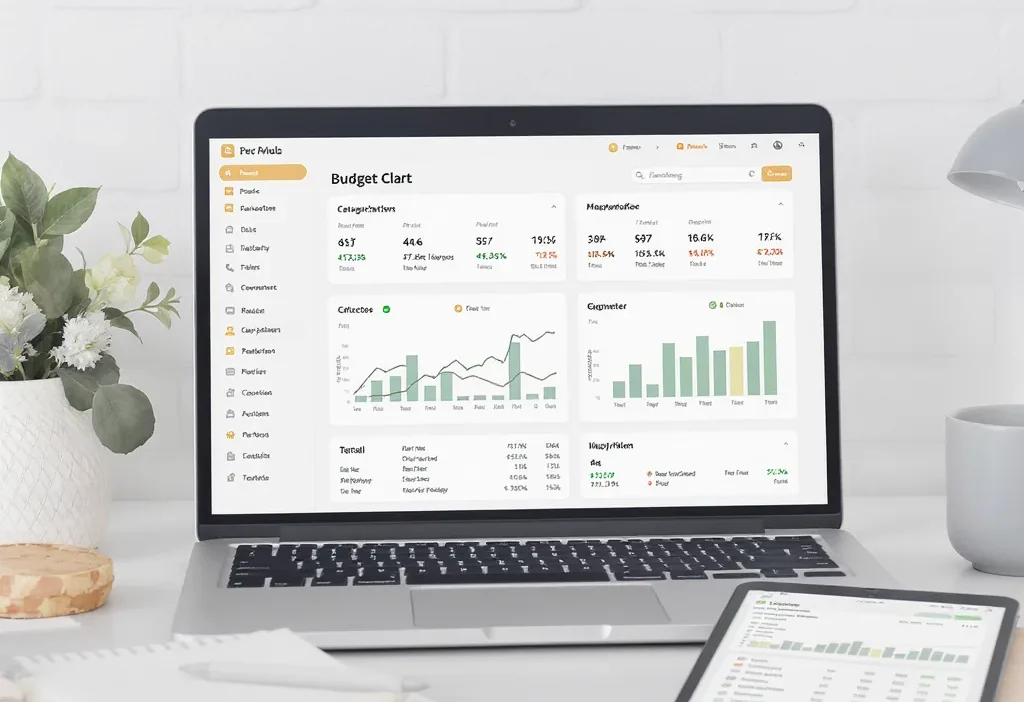
Photo by Tima Miroshnichenko on Pexels
Understanding this core difference—automated budgeting vs manual tracking—is the first step in choosing the right path for you.
When the Budget App Path is Your Best Fit
Choose a dedicated budgeting app if your primary goal is to build consistent financial habits with minimal daily effort. This path is ideal for those who see budgeting as a necessary chore, not a hobby, and need the system to do most of the heavy lifting.
You’re starting from scratch or overcoming debt.
If the thought of building a spreadsheet from zero is overwhelming, an app provides a ready-made structure. Popular apps use proven frameworks (like the envelope system or zero-based budgeting) that guide your decisions. For those tackling debt, features like payoff calculators and progress trackers offer crucial motivation and clarity without complex setup.
You value “set and forget” tracking.
The killer feature of most apps is bank synchronization. Once linked, your transactions flow in automatically, saving you hours of manual entry each month. This passive tracking means you’re more likely to keep the budget updated, as the barrier to entry is just opening the app to review categorized spending.
You need behavioral guardrails.
If you struggle with impulse spending or simply want a nudge to stay on course, an app’s real-time alerts are invaluable. Getting a notification on your phone that your “Dining Out” budget is 90% full is a powerful, immediate behavioral cue that a static spreadsheet can’t provide.
When the Spreadsheet Path Gives You the Edge
Opt for a spreadsheet if your financial life doesn’t fit into standard categories or if you derive satisfaction from building and tweaking your own system. This path rewards those who want a tool that bends to their will, not the other way around.
Your income or expenses are non-standard.
Freelancers, business owners, or anyone with highly variable income benefit immensely from a spreadsheet’s flexibility. You can build forecasting models, create custom sinking funds for irregular expenses, and design cash flow projections that most apps can’t handle. The spreadsheet budgeting method allows you to model scenarios, like a “debt avalanche” vs. “debt snowball” payoff, with complete transparency.
You crave deep customization and reporting.
Want a graph that compares your grocery spending this year to last year, filtered by store? Need a dashboard that combines budget tracking with net worth and investment projections? A spreadsheet is a limitless canvas. You control the data, the formulas, and the final output, creating reports that answer your specific questions.
You prioritize privacy, cost, and understanding.
Spreadsheets are typically free (Google Sheets) or a one-time purchase (Excel). They also keep your data on your device, addressing privacy concerns some have with linking bank accounts. Most importantly, the act of building your budget manually fosters a profound understanding of your finances—you see the connections because you created them.
Side-by-Side Comparison: Key Decision Factors
To make your choice clearer, here’s a direct comparison of budget app vs spreadsheet across the key factors that matter most for daily use.
| Decision Factor | Budget App | Spreadsheet |
|---|---|---|
| Cost | Often freemium; premium features require a monthly/yearly subscription. | Typically free (Google Sheets) or a one-time software cost (Excel). |
| Setup Time & Learning Curve | Fast. Guided setup gets you running in minutes. | Slow. Requires you to design the system yourself, which has a steeper initial learning curve. |
| Ease of Daily Use | Very easy. Log in, review auto-categorized transactions, adjust as needed. | Manual. Requires consistent data entry and upkeep, which can become a chore. |
| Customization & Flexibility | Limited. You work within the app’s predefined categories and rules. | Unlimited. You can design any layout, category, formula, or report you can imagine. |
| Data Control & Privacy | Less control. Requires linking bank accounts; data is stored on the app’s servers. | Full control. Your data stays on your device; no need for third-party connections. |
| Automation & Bank Syncing | Core feature. Transactions import automatically, saving significant time. | None. All data entry and categorization must be done manually. |
| Reporting & Insights | Pre-built, simple reports and charts. Easy to understand at a glance. | Fully customizable. You can build complex reports and dashboards tailored to your goals. |
| Mobile Access | Excellent. Native apps are designed for on-the-go checking and entry. | Possible but clunky. Mobile spreadsheet editing is often less intuitive than desktop. |
Your Decision Checklist: What to Ask Yourself
Still unsure? Answer these quick, practical questions. Your honest responses will point you toward the right tool.
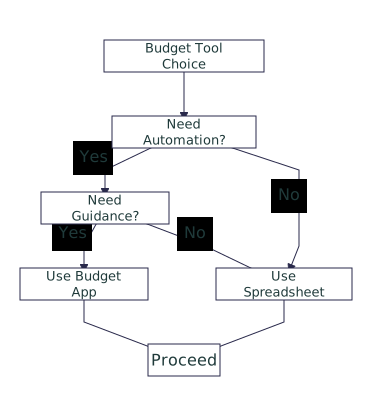
- Do I need reminders and alerts to stay on track? (Yes = App)
- Do I enjoy tinkering with numbers and building systems? (Yes = Spreadsheet)
- Is my financial situation pretty standard, or is it complex/variable? (Complex = Spreadsheet)
- What’s my tolerance for weekly manual data entry? (Low = App, High/Neutral = Spreadsheet)
- Is my primary goal simplicity and habit-building, or total control and deep analysis? (Simplicity = App, Control = Spreadsheet)
Remember, this isn’t a lifetime commitment. You can always start with a simple app to build momentum and later graduate to a spreadsheet for more power, or vice-versa.
Finding Your Financial Fit
The perfect budgeting tool doesn’t exist. You’re choosing between a tradeoff: the effortless automation and guidance of an app versus the complete control and customization of a spreadsheet. You can’t have both in one free, perfectly simple package.
The “best” choice isn’t the one with the most features; it’s the one that aligns with your personality, your goals, and—most critically—the system you will actually use consistently. Whether you choose the streamlined app budgeting workflow or the hands-on spreadsheet budgeting method, the real victory is gaining clarity and control over your money.
Don’t let perfect be the enemy of good. Pick the path that feels right for you right now, and start. You can always switch lanes later.