
You open your budgeting app, ready to tackle your finances, and are immediately met with a wall of text. “Groceries,” “Food,” “Dining Out,” “Coffee,” “Target Run,” “Household Stuff”—the categories are a jumbled mess, overlapping and confusing. Tracking a single purchase feels like a logic puzzle, and the motivation to stick with your plan evaporates before you even start. This clutter is the silent killer of good financial intentions. The solution isn’t more willpower; it’s a better, cleaner framework. A practical budget category checklist cuts through that noise, replacing chaos with a simple, organized structure that actually works. This guide provides that exact checklist, helping you build a monthly plan that is clear, functional, and far less stressful to maintain.
A budget category checklist is a curated list of spending and income groups that creates a clear, organized framework for your monthly money plan. Using a standardized checklist prevents overlap, ensures you don’t miss key expenses, and makes tracking consistent and less stressful. It provides the foundational structure you need to see exactly where your money is going, turning a messy spreadsheet into a powerful tool for financial control.
The Core Budget Category Checklist

Photo by freestocks.org on Pexels
Think of this as your starter kit for a monthly budget category list. These are the foundational groups that capture where money typically goes. By starting with this standardized set, you avoid the chaos of creating categories on the fly and build a consistent tracking system from day one.
Fixed Needs (Essential & Predictable)
These are your non-negotiable, recurring costs that stay roughly the same each month.
- Rent or Mortgage
- Home/Renter’s Insurance
- Car Payment & Auto Insurance
- Health Insurance Premiums
- Debt Payments (minimums for student loans, credit cards)
- Subscriptions (streaming, software, gym memberships)
- Childcare or Dependent Care
Variable Needs (Essential but Fluctuating)
Costs you must pay, but the amount can change based on usage or need.
- Groceries & Household Supplies
- Utilities (electricity, gas, water, internet, cell phone)
- Fuel/Public Transportation
- Medical & Pharmacy Costs (co-pays, prescriptions)
- Home & Car Maintenance (a sinking fund for repairs)
Wants (Lifestyle & Discretionary)
This is your quality-of-life spending. It’s important to track it, not eliminate it.
- Dining Out & Takeout
- Entertainment (movies, concerts, hobbies)
- Personal Care (haircuts, cosmetics)
- Clothing & Accessories
- Travel & Vacation Fund
- Gifts & Donations
Savings, Investments & Debt Goals
Money you’re intentionally setting aside for the future or to get ahead.
- Emergency Fund
- Retirement (IRA, 401k)
- Other Investments
- Extra Debt Payments (above the minimum)
- Big-Purchase Savings (down payment, new car)
Income (Money Coming In)
Don’t forget to categorize your inflows for a complete picture.
- Primary Job Salary/Wages
- Side Hustle or Freelance Income
- Investment Income (dividends, interest)
- Any Other Regular Income
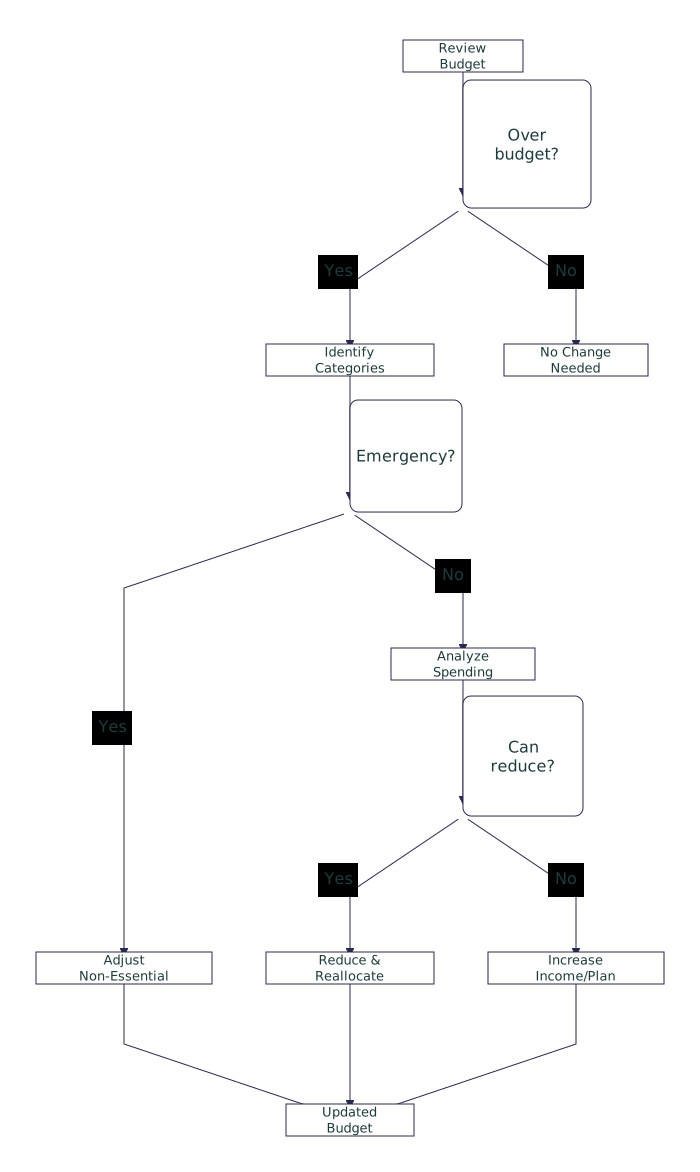
How to Customize Your Checklist (A Simple Flow)
Your life isn’t generic, and your organized budget categories shouldn’t be either. The core list is a template. Here’s a simple, scenario-based flow to make it yours.
If you’re a freelancer or gig worker: Your income is variable. Create a robust “Taxes” category to set aside money for quarterly payments, and consider an “Income Buffer” category for lean months.
If you have pets: Add a “Pet Care” category for food, vet visits, and grooming. This prevents those costs from silently inflating your “Groceries” or “Miscellaneous” spending.
If you’re focused on a specific goal: Like paying off a student loan, make it a star player. You might rename “Extra Debt Payments” to “Student Loan Attack Fund” to keep you motivated.
Dos and Don’ts of Customization
Do: Review 2-3 months of bank/credit card statements to see where your money actually goes. Do: Combine tiny, similar categories (e.g., “Netflix” and “Hulu” into “Streaming Subscriptions”). Do: Create a small “Miscellaneous” or “Personal Spending” buffer for truly unplanned, one-off purchases.
Don’t: Create a separate category for every single store you shop at. Don’t: Ignore irregular annual expenses (like car registration or holiday gifts); create a sinking fund category for them and contribute a little each month.
Common Budget Category Mistakes (And How to Fix Them)
Even with a good list, it’s easy to stumble. Recognizing these common pitfalls can save you from frustration and make your budget more effective.
Mistake 1: Creating Too Many Categories
The Problem: You have a category for “Coffee Shops,” “Fast Food,” “Nice Restaurants,” and “Work Lunches.” This leads to analysis paralysis and makes tracking a tedious chore.
The Fix: Consolidate. Group them all under “Dining Out.” The goal is clarity, not microscopic detail. If you really want to track coffee separately, do it for one month as an audit, then fold it back in.
Mistake 2: Forgetting Irregular Expenses
The Problem: Your budget works perfectly until December, when you need $600 for gifts and travel, blowing your entire plan.
The Fix: Identify these annual or semi-annual expenses (car insurance, property taxes, holiday spending, subscriptions). Divide the total cost by 12, and create a category where you save that amount each month. When the bill arrives, the money is waiting.
Mistake 3: Not Having a “Fun Money” Category
The Problem: Your budget feels like a straitjacket because every dollar is assigned to a serious “adult” category. This leads to burnout and abandoning the budget entirely.
The Fix: Mandate fun. Create a discretionary category for guilt-free spending—call it “Blow Money,” “Guilt-Free Spending,” or “Treat Yourself.” This gives you permission to enjoy your money within a planned limit, which is sustainable.
Mistake 4: Mismatched Categories Between Partners
The Problem: You call it “Groceries,” your partner logs it as “Household.” You’re both right, but now your numbers never match, causing confusion and conflict.
The Fix: Sit down together and agree on the master list. Define what goes in each category (e.g., “Groceries is food and drink; toilet paper and cleaning supplies go in ‘Household'”). This creates a single source of truth for your shared finances.
Putting Your Cleaner Plan Into Action
You have your personalized, organized budget categories. Now, let’s get them out of your head and into a working system. The first month is about learning, not perfection.
Do: Input all your categories into your chosen tool—whether it’s a budgeting app like YNAB, a spreadsheet, or even a notebook. The act of writing them down solidifies the plan.
Do: Set initial spending targets (budget amounts) for each category. For your first month, these are educated guesses. It’s okay. Use past statements to inform them.
Do: Schedule a quick, 15-minute mid-month check-in. See which categories are running high or low and adjust your spending (or your targets) for the rest of the month. This is normal calibration.
Don’t: Judge the system as a failure if you overspend in a category the first time. You’re gathering real-time data on your habits. The goal for Month 1 is simply to track every transaction in your new categories consistently.
A Cleaner List for a Clearer Mind
A well-organized monthly budget category list isn’t about restriction; it’s a tool for clarity and control. It transforms a vague feeling of anxiety about money into a concrete, manageable plan. By removing the clutter of overlapping categories, you free up mental energy and reduce the friction of tracking your spending.
The ultimate goal is to make your finances feel simpler and less stressful. Start with the core checklist, customize it to fit your life, and give yourself grace during the first month of implementation. This system is meant to work for you, not the other way around.