Let’s be honest: the word “budget” probably makes you think of restriction, complicated spreadsheets, and a vague sense of guilt about that last coffee you bought. What if we told you that’s the exact opposite of what a real budget organization system is about? The truth is, feeling broke despite earning money isn’t a character flaw—it’s a system flaw. You’re not disorganized; you just haven’t been given a clear, beginner-friendly map. This guide flips the script. We’re not here to police your spending with hardship. We’re here to build you a complete, actionable system for financial clarity using simple, powerful budget organization hacks. It starts with understanding your money flow, not cutting it off, and it leads to a sense of freedom you might not believe is possible right now.
Budget organization for beginners starts with a single ‘home’ for your money info, using the 50/30/20 rule as a guidepost, and focusing on tracking what you *actually* spend for one month before making any major changes. This awareness is the first and most powerful hack. Forget complex math; your initial goal is simply to gather all your income and expenses in one place and categorize them. The system works by creating visibility first, which naturally leads to control, without the need for drastic willpower or deprivation.
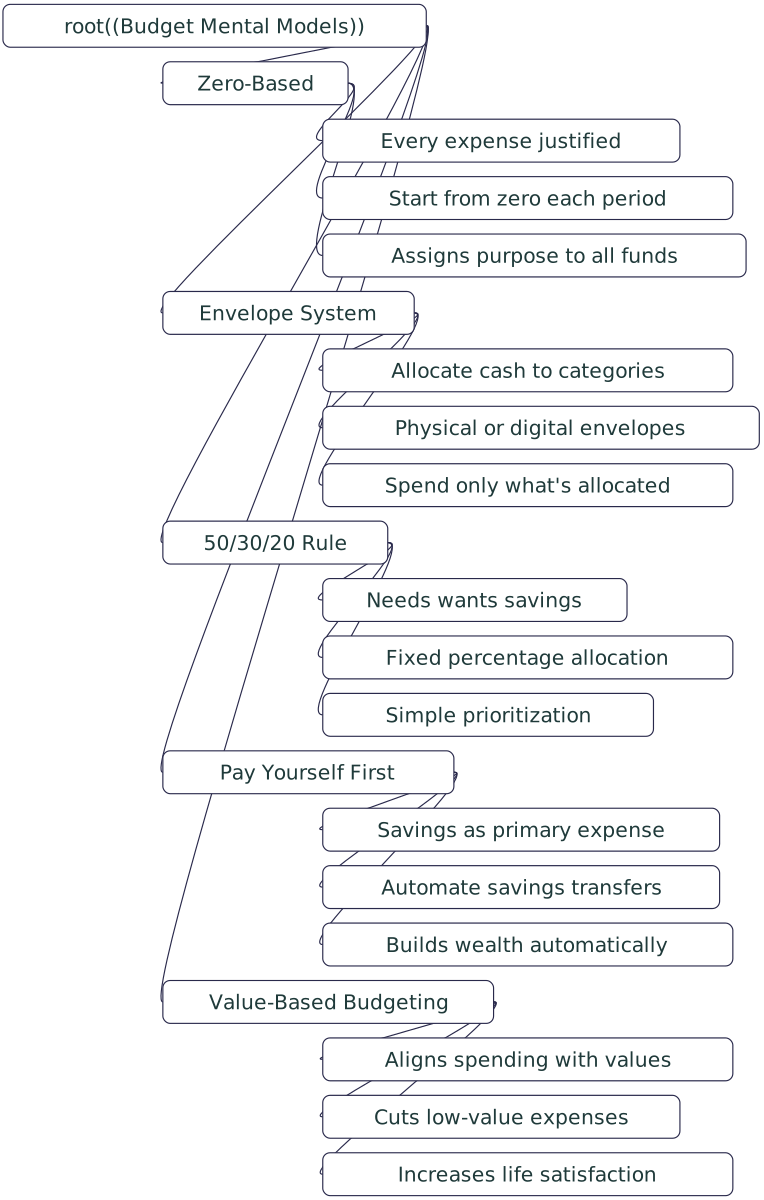
The Beginner’s Budget Toolkit: Your 3 Essential Mental Models
Before you download an app or open a spreadsheet, let’s get your head in the right space. The best budget organization system starts with how you think about money, not the software you use. These three mental models are your foundation.
1. Your Budget is a Plan, Not a Prison
This is the most important shift. A budget isn’t about what you can’t have; it’s a plan for what you can have. It’s the tool that gives you permission to spend on things you enjoy, guilt-free, because you’ve already accounted for your needs and goals. Think of it as a map for your money, leading you toward freedom, not restriction.
2. The “Money Home Base” Principle
Financial chaos happens when your information is scattered across five different apps, a pile of receipts, and your memory. The core of any budgeting system for beginners is creating a single “Home Base”—one place where all your income and spending information lives. This could be an app, a single spreadsheet, or a notebook. One place. One truth. This hack alone eliminates most of the overwhelm.
3. The 50/30/20 Rule: A Guidepost, Not a Law
You’ve probably heard of this framework: 50% of your income goes to Needs, 30% to Wants, and 20% to Savings/Debt. For a beginner, its greatest power is as a diagnostic tool, not a rigid target. Don’t stress if your current spending is 60/35/5. Use it as a guiding light to see where you are versus where you might want to go. It simplifies the complex world of personal finance into three clear buckets.
Hack #1: The 60-Minute Financial Snapshot (Your Starting Point)
You can’t organize what you can’t see. Your first action is a time-boxed, no-excuses audit. Block one hour, get a coffee, and gather every financial document from the last 30 days. This isn’t about judgment; it’s about awareness, which is the first and most powerful of all budget organization tips.
Here’s your literal checklist:
- Your last bank statement (checking & savings).
- Your last 2-3 pay stubs (or your average monthly take-home pay if it’s variable).
- Your recurring bill statements (rent/mortgage, utilities, phone, internet, insurance, subscriptions).
- A quick look at your last month’s credit card transactions.
Your goal? Write down two numbers: 1) Your total net income for the month, and 2) Your total fixed, essential expenses. The gap between them is your starting point. This snapshot cuts through the anxiety and gives you concrete data to work with.
Your Snapshot Quick-Start List
- Use a timer. The one-hour limit prevents overthinking.
- Grab a physical folder or create a “Budget” folder on your desktop for these documents.
- Jot notes on a piece of paper—totals, due dates, and any surprises.
- Celebrate doing it. This is the hardest step, and you’ve already done it.
Choosing Your Command Center: App, Spreadsheet, or Paper?
Now, you need a “Home Base.” The best tool is the one you’ll actually use. Let’s break down the three main options to cure decision paralysis.
Budgeting Apps (The Automated Assistant)
Best for: The “set-it-and-forget-it” beginner who hates manual entry and wants automatic tracking. Apps like Mint, YNAB (You Need A Budget), or EveryDollar connect to your accounts and categorize spending for you.
The catch: You trade some control for convenience. Syncing can sometimes be glitchy, and you must be comfortable linking your financial accounts.
The Simple Spreadsheet (The Control Center)
Best for: The person who wants clarity, control, and a free option. Using a simple budgeting system like a Google Sheets template forces you to engage with your numbers manually, which builds deeper awareness. It’s completely customizable and private.
Pro tip: Start with a basic template. We recommend a simple one like this Google Sheets Budget Template to avoid building something too complex from scratch.
The Paper Notebook (The Analog Mind)
Best for: Anyone who thinks better with pen and paper, or who wants a complete digital detox from their finances. The physical act of writing can make spending feel more real. It’s also completely flexible and offline.
The reality: It requires the most discipline to maintain and doesn’t automate math. But for some, that tactile process is the key to sticking with it.
Think about the last time you tried to track something, like meals or exercise. Did you use your phone notes, a fancy app, or a journal? Your past behavior is a great clue for what will work for your budget setup guide. The goal is consistency, not sophistication.
The Core Setup: Building Your First Budget Categories
Categories are the folders for your money. The biggest mistake here is creating 30 hyper-specific categories (“Coffee,” “Streaming Service A,” “Streaming Service B”). You’ll burn out. Instead, start broad. The goal is to organize your budget for insight, not for accounting perfection.
Use the 50/30/20 framework as a scaffold to build your personalized list:
Needs (The 50% Bucket – Essentials)
These are non-negotiable payments for your basic living. Think: Rent/Mortgage, Utilities (electric, water, gas), Groceries (food at home), Basic Transportation (gas, bus pass), Minimum Debt Payments, Essential Insurance.
Wants (The 30% Bucket – Lifestyle)
This is your quality-of-life and fun money. Examples: Dining Out, Entertainment (movies, subscriptions), Hobbies, Personal Care (haircuts, non-essential toiletries), New Clothes, Travel Fund.
Goals & Savings (The 20% Bucket – Future You)
This is for building security and your future. Include: Emergency Fund Savings, Retirement (IRA/401k), Debt Paydown Above the Minimum, Saving for a specific goal (car, vacation, down payment).
Your setup checklist:
- Open your chosen tool (app, sheet, notebook).
- Create three main headers: Needs, Wants, Goals/Savings.
- Under each, list 4-7 broad categories that cover 95% of your spending.
- Add a “Miscellaneous” or “Stuff I Forgot” category. You will need it.
- Do NOT aim for perfection. You can always split a category later if it’s too broad.
Your 4-Week Tracking Sprint: Observe, Don’t Judge
Here is the transformative hack: For your first full month, do NOT try to change your spending. Your only job is to track every single dollar that comes in and goes out. This turns budgeting from a restrictive chore into a fascinating discovery mission about your own habits.

Photo by Arina Krasnikova on Pexels
Commit to a 5-minute daily micro-routine. Every evening, open your Home Base and log the day’s transactions from your receipts, bank app, or memory. If you use cash, throw receipts in a jar and log them once a week. The key is consistency.
Your Weekly Check-In
Each Sunday, spend 10 minutes reviewing your week. Don’t criticize, just categorize. Ask: “Did anything surprise me? Where did most of my ‘Wants’ money go?” This builds the habit of awareness without the pressure of immediate change. By the end of the month, you’ll have a complete, non-judgmental picture of your real financial life—the only solid foundation for a plan that actually works.
The Review & Tweak: Making Your Budget Work For You
After your 4-week tracking sprint, you have gold: real data. Now, compare your actual spending to your 50/30/20 guideposts. This review is where true budget management hacks come to life.
Let’s say you discover your “Wants” (like takeout and online shopping) are actually at 40%, pushing your “Savings” down to 5%. This isn’t a failure; it’s a diagnosis. The hack is to make one or two conscious tweaks for the next month, not a drastic overhaul.
The Gentle Adjustment Method
Instead of vowing to never eat out again, decide to reallocate funds. Could you reduce dining out by $50 this month and move that $50 to your savings category? Could you cancel one unused subscription? The goal is to make your budget reflect your priorities. Maybe a 55/25/20 split is more realistic for you right now. That’s okay. The budget serves you, not the other way around. This process of review and gentle tweaking is the engine of financial progress.
Common Budget Organization Pitfalls (And How to Skip Them)
Everyone stumbles at the start. Knowing these common traps lets you leap right over them.
Pitfall 1: The Over-Complication Quit
The Mistake: Creating 25+ categories from day one. It’s exhausting to maintain.
The Hack: Start with 10-15 broad categories max. You can always split “Entertainment” into “Streaming” and “Live Events” later if you need more detail.
Pitfall 2: Forgetting the “Once-a-Year” Bills
The Mistake: Getting hit by an annual insurance premium or car registration and feeling your budget “broke.”
The Hack: Divide the annual cost by 12. Each month, move that amount into a “Sinking Fund” category in your savings. When the bill arrives, the money is waiting.
Pitfall 3: Budgeting Zero Dollars for Fun
The Mistake: Creating a Spartan budget that eliminates all joy. This leads to burnout and binge spending.
The Hack: Always include a “Fun Money” category. Even $20 a week for a coffee or a movie rental makes the plan sustainable.
Pitfall 4: Going It Alone
The Mistake: Keeping your budget a secret from a partner or trying to manage it all in your head.
The Hack: Make your Money Home Base visible (a shared spreadsheet, a regular money chat). Shared awareness creates shared responsibility and support.
From Project to Habit: Your Weekly Budget Maintenance Routine
The final hack is turning this from a one-time project into a lightweight, lifelong habit. Your system is set up; now you just need to maintain it with a simple, non-negotiable weekly routine.
Block 15 minutes on your calendar every week (Sunday evening or Monday morning works for most). In that time, you will: 1) Log any uncategorized transactions from the past week, 2) Check your account balances against your budget, 3) Briefly glance at next week’s expected bills. That’s it. This tiny habit prevents a mountain of end-of-month confusion and keeps you in gentle, consistent control.
Your Weekly Ritual Checklist
- Gather receipts or open your banking app.
- Reconcile: Ensure your tracked spending matches your actual bank balance.
- Celebrate a “win”—even if it’s just sticking to the routine.
- Look ahead: Any big expenses coming up in the next 2-4 weeks?
- Adjust if needed: Move $10 from Dining Out to Gas because you have a road trip? Do it now.
Your Path to Financial Clarity Starts Now
You now have the complete, beginner-friendly system. Remember, the goal was never perfection—it was progress. The control you’re seeking doesn’t come from willpower; it comes from the simple, clear system you’ve just built: a Home Base for your money, a framework to understand it, and a routine to maintain it.
The most powerful step is always the next one. So, here is your immediate, non-negotiable action: Block 60 minutes on your calendar this week for your Financial Snapshot. Don’t overthink it. Just start. Gather your statements, find your two key numbers, and feel the relief of turning a vague worry into a concrete plan.
This is how you stop feeling broke despite earning money. This is how you build a life where your money supports your choices, not controls them. You’ve got the toolkit. Now, go build your freedom.
This beginner’s guide to budget organization provides a complete, stress-free system built on awareness first, restriction later. The core flow is simple:
- Mindset First: See your budget as a freedom tool, not a restriction. Adopt the “Money Home Base” principle and use the 50/30/20 rule as a guide.
- Snapshot & Setup: Take a 60-minute Financial Snapshot. Choose your command center (app, spreadsheet, or paper) and set up broad spending categories in Needs, Wants, and Goals.
- Track & Learn: For one month, simply track every expense without judgment. Observe your real habits.
- Review & Tweak: Compare your actual spending to your guideposts. Make one or two conscious, small adjustments for the next month.
- Maintain the Habit: Establish a 15-minute weekly check-in to log transactions, reconcile accounts, and look ahead.
The key is to start simple, be consistent, and adjust the system to fit your life, not the other way around.
Q: How much should I have in savings before I start budgeting?
A: You start budgeting to build savings. Don’t wait. Begin with whatever you have, even if it’s zero. The budgeting process will show you exactly how to find money to start your emergency fund, making it a proactive plan rather than a hopeful wish.
Q: What if my expenses are more than my income?
A: This is exactly why you start with tracking, not cutting. The 4-week tracking sprint will show you precisely where the leak is. Often, it’s a few “Wants” categories adding up. Your first goal then becomes finding one or two expenses to reduce or eliminate to close the gap, even by a small amount.
Q: Is it okay to use multiple bank accounts for budgeting?
A: It can be, but it adds complexity. For a true beginner, we recommend using one checking account as your “Home Base” and using your budget categories to organize digitally. Once you’re comfortable, you can explore a multiple-account system (like one for bills, one for spending) if it helps you visualize.
Q: How do I handle variable income when budgeting?
A: Base your budget on your lowest expected monthly income from the past 6-12 months. Allocate that money to Needs first, then Wants, then Goals. Any extra income in a good month goes straight to your Goals/Savings categories. This builds a buffer and removes the stress of fluctuating paychecks.
Q: What’s the one most important budget hack for someone who’s never done it?
A: The 4-week tracking sprint. Commit to writing down every single expense for one month without trying to change anything. This non-judgmental awareness is the single most enlightening and empowering step. It transforms budgeting from a theory about your money into