
You start a new budget with the best intentions—a clean spreadsheet, color-coded categories, a feeling of control. For a few weeks, maybe even a month, you track every coffee and subscription. Then, life happens. A surprise car repair, a forgotten annual fee, a shift in your grocery spending. The categories no longer fit, the numbers feel disconnected from reality, and the act of updating it starts to feel like a chore. Soon, the spreadsheet is buried in your bookmarks, and that initial sense of order is replaced by a familiar financial fog. This cycle isn’t a personal failing; it’s a systems problem. Most budgets are built as static plans, not living systems designed for the chaos of real life. The solution isn’t another grand overhaul followed by another inevitable collapse. True, long-term financial organization requires a dual approach: a deliberate budget reset to establish an accurate foundation, followed by the strategic integration of specific, low-friction maintenance hacks into your routine. This article is your guide to building a resilient, self-correcting financial system that adapts with you, turning maintenance from a dreaded task into an effortless habit.
A sustainable budget requires two distinct phases. First, a deliberate reset to scrub your financial slate clean—auditing all accounts, redefining spending categories, and choosing your core tracking tools. Second, you lock in long-term organization by embedding specific, low-effort maintenance habits, like a weekly 10-minute money check-in and strategic automation, into your weekly and monthly routine. This combination creates a system that works for you, not one you constantly have to work for.
Here’s how to build a budget that lasts: start with a comprehensive reset—audit all accounts, redefine your categories, and choose your tracking tools. Then, lock in long-term organization with maintenance hacks like a weekly 10-minute money date, strategic automation for bills and savings, and a quarterly ‘budget health check’ to adapt to life’s changes without starting over.
Why Your Budget Breaks (And How to Fix It For Good)
Most budgets don’t fail because of a lack of effort; they fail because of a flawed design. The traditional approach—creating a rigid spreadsheet once and hoping willpower carries you through—ignores three critical realities: life changes, human psychology, and the need for a system that corrects itself. The result is a familiar cycle: you start strong, an unexpected expense pops up, you feel guilty for “breaking” the budget, and eventually, you stop opening the file altogether.
The solution isn’t to try harder. It’s to build a better system. This is the core philosophy behind effective long-term money organization: you need a one-time, thorough budget reset to establish a clean, accurate foundation, followed by the deliberate integration of specific maintenance hacks into your life. Think of it like car ownership. The reset is the major service that gets everything running smoothly. The maintenance hacks are the weekly check of tire pressure and oil levels—small, habitual actions that prevent a total breakdown. For a refresher on foundational concepts before your reset, resources like NerdWallet’s budgeting guide can be helpful.
Phase 1: The Complete Budget Reset Toolkit
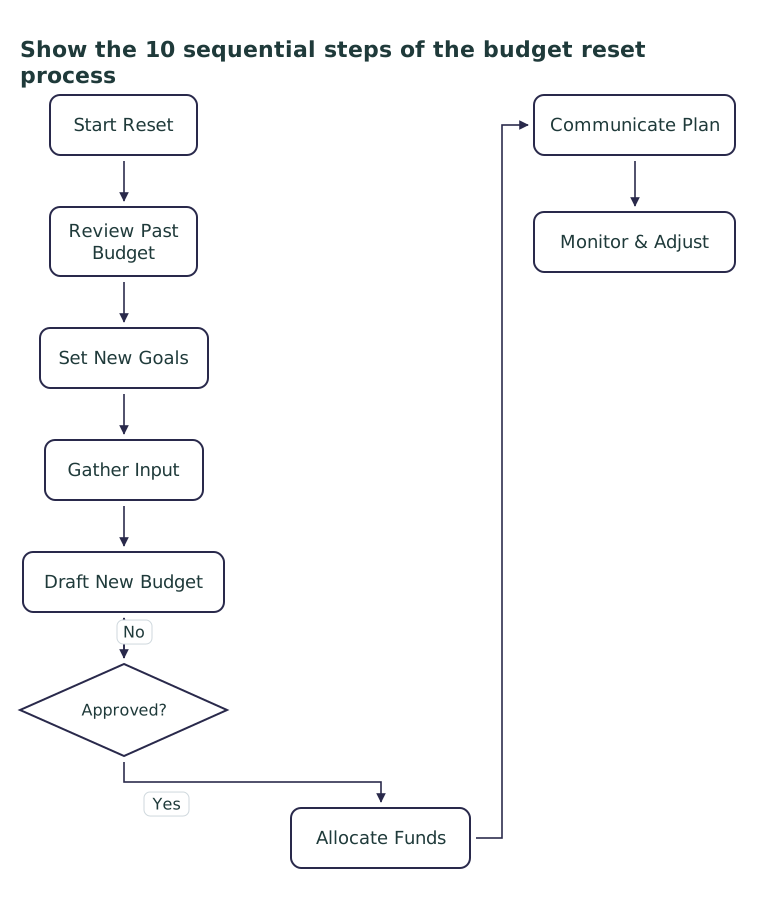
This isn’t a tweak; it’s a fresh start. A proper budget reset is a deliberate project that clears out the clutter of your old system and builds a new one aligned with your current financial reality. Follow this sequential 10-step guide. Don’t skip steps—this process is designed to uncover truths and create a sustainable framework.
The Audit & Analysis
Step 1: Mental Prep & Goal Setting. Before looking at a single number, define your “why.” Is this reset about reducing debt stress, saving for a house, or simply feeling in control? Write down 1-3 primary financial goals.
Step 2: Gather Financial Data. Collect statements for the last 90 days from all accounts: checking, savings, credit cards, and loan statements. This gives you a complete picture of cash flow.
Step 3: Categorize Every Transaction. Go through the 90 days of data and label every income and expense. Use broad categories initially (e.g., Housing, Food, Transportation, Debt, Personal, Savings).
Step 4: Analyze & Identify Patterns. Tally each category. Where is your money actually going? Look for surprises, leaks (like forgotten subscriptions), and patterns in your spending behavior.
The Re-Categorization & Targeting
Step 5: Set Realistic New Targets. Based on your analysis and goals, set new monthly targets for each category. Be honest about fixed costs (rent) and flexible ones (dining out). This is where you make intentional choices, not punitive ones.
Step 6: Choose Your Primary Tool. Decide where this budget will live. Will it be an app, a spreadsheet, or a notebook? Your choice here is critical for maintenance, which we’ll explore in the next section.
The System Setup
Step 7: Set Up Your Tracking System. Input your new categories and targets into your chosen tool. Create the structure. This is the skeleton of your new financial organization system.
Step 8: Schedule Your First Check-In. Before you finish, block 15 minutes on your calendar for one week from today. This is your first maintenance commitment.
Step 9: Communicate (If Shared). If you manage finances with a partner, walk them through the new plan. Alignment is non-negotiable for shared financial maintenance.
Step 10: Launch & Monitor. Go live. Use your new system for the next week, then conduct that first check-in to see what needs adjusting.
Your Reset Launch Kit
Before you start, gather these five items:
- 90 days of bank/credit card statements (digital or physical).
- A list of all active subscriptions and recurring bills.
- Your most recent pay stubs or income records.
- Your written financial goals (from Step 1).
- A quiet 90-minute block of time to work undisturbed.
Choosing Your Maintenance Foundation: Analog vs. Digital
The success of your budget maintenance routine hinges on choosing a method and tool you’ll actually use. There’s no “best” option—only the best fit for your lifestyle and brain. Let’s compare the main paths.
Digital Tools (Apps & Spreadsheets): Apps like YNAB (You Need A Budget) or Monarch automate transaction imports and provide real-time syncing across devices. They excel at reducing manual entry, offering insightful charts, and making on-the-go check-ins easy. Spreadsheets (like Google Sheets) offer total customization and a one-time setup cost, but require more manual upkeep. Digital systems are powerful for those who want automation and data visibility.
Analog Systems (Cash Envelopes & Bullet Journals): The physical act of allocating cash into envelopes or writing numbers in a journal creates a tangible, psychological connection to your money. It’s simple, has no tech glitches, and forces you to be consciously present with every spend. The downside is a lack of automation and the need to carry cash or manually track digital spends. This method often works brilliantly for visual/tactile learners or those wanting a strict spending limit.
The key to long-term organization is to match the tool’s maintenance demands with your personal tolerance. If you hate data entry, a manual spreadsheet will fail. If you need constant visibility, cash envelopes might feel opaque. Choose the foundation that makes your weekly upkeep feel least like a chore.
Phase 2: The Maintenance Hack Library
With your reset complete, the goal shifts from building to upkeep. These budget maintenance hacks are designed to be low-friction actions you embed into existing routines, transforming upkeep from a daunting task into a series of simple habits.
Weekly Upkeep Hacks
- The 10-Minute Money Date: Every week, block ten minutes to log recent transactions, check category balances, and reconcile accounts. Consistency trumps duration.
- The “Check-Before-You-Spend” Rule: For discretionary categories (like dining or hobbies), make a habit of glancing at your budget balance before making a non-essential purchase.
- The Sunday Night Reset: Use this time to preview the week ahead—any big bills due? Any social plans that need a budget?
Automation & Simplification Hacks
- Auto-Pilot Your Bills & Savings: Set up automatic payments for all fixed bills and, crucially, an automatic transfer to savings on payday. This is the single most effective hack for budget organization habits.
- Consolidate & Reduce: Actively work to reduce the number of financial accounts and subscriptions. Fewer accounts mean less to track.
- Use Alerts: Set up low-balance alerts on your checking account or for specific budget categories in your app.
Mindset & Behavioral Hacks
- Embrace the “Rollover”: If you underspend in a category one week, let that amount roll over into the next. It rewards good behavior and creates flexibility.
- Rename Your Categories: Instead of “Entertainment,” try “Joy & Connection.” Language shapes perception and makes funding these areas feel more intentional.
- Schedule a “Fun Money” Line Item: Budgeting isn’t about deprivation. A dedicated, no-guilt spending category prevents burnout and makes the system sustainable.
Building Your Personalized Maintenance Routine
Now, synthesize the hack library into a schedule that fits your life. The ideal budget maintenance routine is minimal, non-negotiable, and tailored. Here’s how it might look for different lifestyles.
For the Busy Professional: Rely heavily on automation. Set all bills and savings to auto-pay. Then, commit to one 15-minute “Finance Friday” session to scan imported transactions in your app, approve any categorizations, and check your progress toward goals. That’s it.
For the Freelancer with Irregular Income: Your weekly check-in is critical. Every Monday, review last week’s income received and update your monthly income projection. Then, allocate those dollars to your categories using a zero-based approach. A mid-week quick log ensures you’re not overspending before the next income hit.

The core principle is to create a rhythm. Your budget shouldn’t be something you “do” in a marathon session every few months. It should be a lightweight, integrated part of your financial workflow.
Common Budget Maintenance Pitfalls (And How to Sidestep Them)
Even with a good system, predictable traps can derail your budget organization habits. Recognizing them is half the battle.
The Perfectionism Trap: You overspend in one category and decide the whole month (or budget) is ruined. Sidestep: Adopt a “progress, not perfection” mindset. Adjust other categories to compensate, learn from the slip, and move on. Your budget is a tool, not a moral report card.
Tool Hopping: Constantly switching apps or spreadsheets in search of a “magic bullet” wastes time and loses historical data. Sidestep: Commit to your chosen system for at least 3 months. Give yourself time to learn its nuances and build a habit.
Set-and-Forget Savings: You set up an automatic transfer years ago and never increased it. Sidestep: Tie your savings review to your quarterly health check (see below). Ask, “Can I increase this by 1%?”
Ignoring Seasonal Cash Flow: Your budget assumes every month is the same, but holidays, vacations, or annual insurance payments aren’t surprises. Sidestep: Create a “Sinking Funds” category for these irregular expenses. Contribute a small, fixed amount to it monthly so the money is there when needed.
The Quarterly Budget Health Check
This is the master hack that ties your reset and maintenance cycles together. Every three months, schedule a 30-minute “Budget Health Check.” This isn’t a deep audit; it’s a strategic review to prevent drift and ensure your system evolves with your life.
Your quarterly checklist:
- Review Goal Progress: Are you on track? Do goals need adjusting?
- Analyze Category Performance: Which categories are consistently over or under? Do the targets need to be updated to reflect reality?
- Update Income & Fixed Expenses: Did you get a raise? Did your rent increase? Update your numbers.
- Check Automation: Are all automatic transfers and payments still correct?
- Declutter: Remove any old categories you no longer use and simplify your system.
This proactive habit transforms your budget from a static document into a dynamic, living system. It’s the ultimate practice in long-term financial organization, ensuring your money plan always works for you, not against you.
Your Organized Financial Life Starts Now
The path from a broken budget to a resilient, self-correcting system is clear. It requires an upfront investment of focus for the reset, followed by the strategic layering of maintenance habits into the fabric of your week. The power isn’t in any single hack, but in the compound effect of the system they create together.
Your decisive next step is not to read another article. It’s to open your calendar and block 90 minutes within the next three days. Label it “Budget Reset: Data Gathering.” That single action moves you from planning to doing. In that block, complete Steps 1 and 2 from the toolkit. Momentum builds from the first concrete move. Your future self, enjoying the clarity of a truly organized financial life, will thank you for starting today.
Building a budget that lasts requires a two-phase approach: a foundational reset followed by embedded maintenance habits.
- Reset to Build a Clean Foundation: Conduct a thorough 10-step audit of your finances, set realistic new targets, and choose a tracking tool you’ll actually use.
- Maintain with Low-Friction Hacks: Integrate small actions like a weekly money date, full automation for bills/savings, and mindful category rollovers into your routine.
- Prevent Drift with Scheduled Reviews: A quarterly 30-minute health check ensures your system adapts to life changes without needing a complete overhaul.
- System Over Willpower: Long-term organization is achieved by designing a budget that is easy to upkeep, not by relying on constant discipline.
Q: How often should I completely reset my budget?
A: A full, from-scratch reset is typically needed only during major life transitions (new job, moving, marriage) or if your budget has been completely abandoned for months. For most people, the quarterly health check is sufficient to make adjustments, preventing the need for a painful full reset.
Q: What’s the one maintenance hack I should start with if I’m overwhelmed?
A: Start with automation. Set up one automatic transfer to savings and one automatic bill payment. This instantly reduces manual tasks and ensures progress happens even when you’re not actively thinking about your budget. It’s the highest-impact, lowest-effort starting point.
Q: Can I maintain a budget without using apps?
A: Absolutely. Many people successfully use spreadsheets, cash envelope systems, or bullet journals. The key is choosing a method that matches your comfort level. If you enjoy manual tracking and find apps distracting, an analog system can be more sustainable for your long-term organization habits.
Q: How do I handle irregular income in a maintenance routine?
A: Base your budget on your lowest expected monthly income. After each pay period, allocate those specific dollars to your categories (a “zero-based” approach). Your weekly check-in becomes crucial to adjust spending before the next income arrives. A buffer savings category is also essential for smoothing out lean months.
Q: My partner and I can’t agree on a system. Any tips?
A: Focus on shared goals first, not tools. Once aligned on “why,” trial a system for one month that requires the least joint effort, like a shared app with linked accounts for transparency but individual spending alerts. Schedule a brief weekly money meeting to review it together, making it a collaborative check-in rather than a policing activity.