
Let’s be honest: the word “budget” has a bit of a branding problem. For most people, it conjures images of restriction, spreadsheets filled with guilt, and a general sense of financial suffocation. But what if we flipped that script? The real goal of mastering budget setup basics isn’t to build a cage for your money—it’s to construct a clear, reliable operating system for it. Think of it less as a strict diet and more like a GPS for your finances; it doesn’t tell you where you can’t go, it provides the clarity and confidence to navigate toward your goals without constant stress. This process of creating a beginner budget system setup is fundamentally about empowerment. It’s about transforming that vague anxiety about where your money goes each month into actionable awareness, creating a framework that supports your life instead of complicating it. We’re going to strip away the complexity and focus on the simple, sustainable core: choosing a method that makes sense to you, gathering your numbers without judgment, and building a lightweight routine you can actually stick with.
Budget setup basics involve selecting a straightforward budgeting method that fits your life, documenting your income and expenses with honesty, and establishing a simple routine to review your plan. The goal is financial awareness, not punishment. By focusing on these three pillars—method, numbers, and habit—you build a foundational system that reduces stress and creates clarity, turning budgeting from a chore into a tool for freedom.
Your Budget Toolkit: Choosing the Right Method
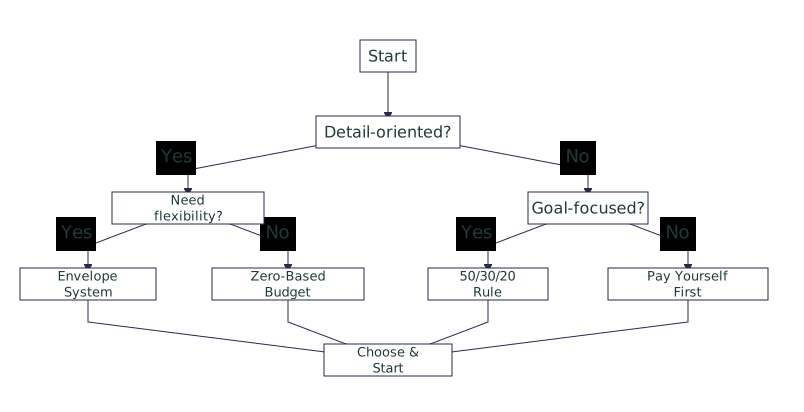
Before you write a single number down, you need a framework. Think of this as choosing the blueprint for your money system. The right method makes the process feel intuitive, not like a chore. Let’s break down a few popular, beginner-friendly approaches to help you organize your budget from the ground up.
The 50/30/20 Rule
This is the classic “set it and mostly forget it” method. You allocate your after-tax income into three buckets: 50% for Needs (rent, groceries, utilities), 30% for Wants (dining out, hobbies, subscriptions), and 20% for Savings and Debt Repayment. It’s fantastic for its simplicity and focus on balance, making it a great first step in a beginner budget system setup.
Zero-Based Budgeting
With this method, you give every dollar a job until your income minus your expenses equals zero. It requires more detailed tracking but offers immense clarity and control. If you love spreadsheets and knowing exactly where every penny is going, this is your framework. It’s the ultimate tool for creating a budget plan with precision.
The “Pay-Yourself-First” Budget
This method flips the script. As soon as you get paid, you automatically transfer a set amount to savings and debt payments. You then live on whatever is left. It prioritizes your financial goals automatically and is perfect if you hate tracking categories but are disciplined about saving. It’s a powerful, simple budgeting system for goal-oriented people.
- Choose the 50/30/20 Rule if you want a simple, proportional guideline and don’t want to track every small purchase.
- Choose Zero-Based Budgeting if you crave detailed control and are willing to do slightly more frequent check-ins.
- Choose “Pay-Yourself-First” if your primary focus is building savings or paying off debt, and you prefer to manage what’s left over more loosely.
Gather Your Numbers: The Pre-Build Inventory
You can’t build a house without knowing what materials you have. This step is your financial inventory. It’s about gathering the raw data—your income and expenses—with honesty, not judgment. Approximations are fine here; perfection is the enemy of progress.
Find Your True Net Income
This is the money that actually hits your bank account after taxes and deductions (like health insurance or retirement contributions). If your income varies, look at the last three months and use a conservative average. This number is the foundation of your entire money management system.
Categorize Your Spending
Grab your bank and credit card statements from the last month. As you scan, sort transactions into two main piles: Fixed Expenses (rent, car payment, minimum debt payments) and Variable Expenses (groceries, gas, entertainment). Don’t forget those sneaky Irregular Expenses that pop up quarterly or annually, like car insurance or holiday gifts. This exercise in personal budget organization is about awareness, not shame.
Imagine Alex, who feels their money disappears each month. They spend 30 minutes with their banking app, scrolling through transactions and jotting down totals for “Food,” “Transport,” and “Subscriptions.” The simple act of categorization often reveals immediate insights—like a forgotten subscription draining $15 monthly—that make the next steps obvious.
Choosing Your Command Center: Apps, Spreadsheets, or Paper?
Your budget needs a home. The tool you choose should match your personality and habits, because you’re more likely to stick with a system that feels natural. Here’s a quick comparison to help you decide.
Budgeting Apps (Automated Tracking): Apps like Mint or YNAB connect to your accounts and import transactions automatically. The huge pro is convenience—it saves manual entry. The potential con is a feeling of detachment; you might review less actively. They’re excellent if you want a hands-off approach to tracking.
Spreadsheets (Flexible & Manual): Tools like Google Sheets or Excel offer total control. You design the categories and formulas. The engagement of manually entering data (even if just weekly) can create a stronger connection to your spending. The trade-off is it requires more discipline.
Pen & Paper (Tactile & Simple): A dedicated notebook or budget planner offers a physical, unplugged experience. Writing numbers down can make them feel more “real.” It’s the simplest option, but reconciling with bank statements takes more time.
Quick-Start Tool Tips
- If you choose an app, spend 15 minutes setting up your categories to match your inventory from the previous section.
- If you choose a spreadsheet, start with a simple template—one tab for your monthly plan, another for tracking actual spending.
- If you choose paper, get a notebook with columns or use a printable template. Keep it with your other essential daily items.
- Whichever you pick, commit to using it for one full budget cycle (e.g., a month) before deciding if you need to switch.
Building Your Routine: The Weekly & Monthly Check-In
A budget isn’t a one-time project; it’s a living system maintained by simple habits. This is where your framework comes to life. The goal is to build a lightweight routine that prevents overwhelm and keeps you in control.

The 10-Minute Weekly Review
Set a recurring calendar reminder. Each week, open your command center and quickly log any transactions that haven’t been auto-imported. Then, glance at your category balances. This isn’t about judgment, it’s about awareness. Ask: “Am I on track? Do I need to move any money between categories for the rest of the week?” This tiny habit prevents end-of-month surprises.
The 30-Minute Monthly Reset
Before the new month begins, sit down for a slightly longer session. Review the past month—what went well? What category was consistently over? Adjust your planned amounts for the coming month based on reality, not hope. This is also when you fund those “Irregular Expense” categories for upcoming annual bills. This monthly reset is the heartbeat of a sustainable financial organization basics practice.
- Weekly: Log transactions, check category balances, no drama.
- Monthly: Review past performance, adjust next month’s plan, fund sinking funds.
- Always: Celebrate what you managed well, and treat overspending as data to learn from, not a failure.
Common Budget Setup Stumbles (And How to Sidestep Them)
Everyone hits bumps when starting. Anticipating these common pitfalls can help you navigate around them and stay committed to your new system.
Stumble: Setting Unrealistic, Restrictive Categories
Don’t: Slash your “Dining Out” budget from $300 to $50 because you feel guilty, setting yourself up for immediate failure.
Do Sidestep It: Start with your actual spending from last month as the baseline. Then, aim for a modest, achievable reduction for the next month (e.g., from $300 to $250). Gradual change sticks.
Stumble: Forgetting Irregular & Annual Expenses
Don’t: Let a $600 car insurance bill derail your entire monthly plan because you didn’t see it coming.
Do Sidestep It: During your inventory, list all non-monthly bills. Divide the annual total by 12, and set aside that amount each month into a dedicated “Car Insurance” category (often called a sinking fund).
Stumble: Giving Up After One “Bad” Month
Don’t: Throw your hands up and abandon the budget because you overspent in July.
Do Sidestep It: Reframe. A budget is a tracking tool, not a moral report card. A “bad” month is the most valuable data point you have. Analyze it calmly during your monthly reset and adjust your plan for the next month. The system is working when it helps you see the truth.
Stumble: Overcomplicating Everything From Day One
Don’t: Create 37 sub-categories, five different savings accounts, and a complex spreadsheet before you’ve even completed one full cycle.
Do Sidestep It: Embrace simplicity. Start with 5-10 broad categories. You can always add more granularity later. A simple, consistent system beats a perfect, abandoned one every time. This is the core of successful budget setup basics.
Your Organized Financial Life Starts Now
You now have the core components: a method that fits your style, the knowledge to gather your numbers, a tool to host your plan, and a simple routine to maintain it. This isn’t about constructing a rigid cage for your money, but about building a clear map that gives you permission to spend on what you truly value, guilt-free.
The most powerful step is the first one. Tonight, before the motivation fades, pick one of the budgeting methods outlined here and open your last bank statement. Start that inventory. Your future self, the one with less money stress and more financial confidence, will thank you for taking this single, decisive action to build your money operating system.
Mastering budget setup basics comes down to four pillars: Method, Numbers, Tool, and Routine. First, choose a simple budgeting framework like the 50/30/20 rule that aligns with your personality. Second, honestly gather your income and expense data—this inventory is your non-negotiable foundation. Third, select a command center (app, spreadsheet, or paper) that you’ll actually enjoy using. Finally, cement the system with a lightweight weekly check-in and a monthly reset habit. Remember, consistency with a simple plan will always outperform a complex system you abandon.