
You set up your budget with the best intentions, tracking every coffee and subscription for a week or two. Then, life gets busy. A receipt gets lost, a week gets skipped, and that spreadsheet starts to feel less like a tool and more like a nagging chore. Before you know it, you’ve abandoned the whole effort, telling yourself you’ll “get back on track next month.” The problem isn’t a lack of financial willpower—it’s a flawed system. A sustainable budget tracking workflow isn’t about obsessive daily logging; it’s a designed protocol and a review rhythm that turns financial management from a sporadic, guilt-inducing task into a seamless, informative habit that actually sticks.
An effective budget tracking workflow is a 4-part system: Capture, Categorize, Review, and Adjust. The sustainable review rhythm involves a quick daily check-in for awareness, a weekly reconciliation for accuracy, and a monthly strategic review for planning. The key is building a consistent system that provides clarity, not striving for perfect tracking that leads to burnout.
Why Your Current Budget Tracking Method Probably Fails
Let’s be honest: most budget systems collapse not because of a lack of willpower, but because of flawed design. The common approach—trying to remember every coffee, logging expenses for two weeks then stopping, or staring at a spreadsheet once a quarter in a panic—isn’t a system. It’s a series of sporadic, stressful events. The failure points are predictable: relying on memory (which is terrible for small purchases), having no consistent capture method, and lacking a scheduled budget review process. When tracking feels like a punitive chore, it’s the first thing you abandon. scheduled budget review process
The underlying issue is treating the budget as a restrictive rulebook rather than an informative dashboard. A sustainable personal budget system isn’t about saying “no”; it’s about creating a clear feedback loop between your plans and your reality. Without a designed financial tracking rhythm, you’re flying blind between paychecks, which leads to the very stress and surprise you wanted to avoid. The solution isn’t to try harder, but to build a better, more forgiving workflow.
The Core Components of a Bulletproof Budget Workflow
An effective budget tracking routine isn‘t a single action but a closed-loop protocol. Think of it as a four-phase cycle that turns raw data into actionable insight. This workflow ensures nothing falls through the cracks and your plan evolves with your life.

Photo by www.kaboompics.com on Pexels
1. Capture
This is the foundation: recording every financial transaction, both money in and money out. The goal is completeness, not perfection. Whether you snap a photo of a receipt, let an app auto-import, or jot it in a notes app, the method must be so easy you’ll do it consistently. The moment you rely on “I’ll log it later,” the system begins to decay.
2. Categorize
Here, raw data becomes information. Assigning each captured transaction to a category (e.g., Groceries, Dining, Utilities) is what allows you to see patterns. This step transforms a list of random purchases into a clear picture of where your money is actually going, which is the entire point of cash flow monitoring.
3. Review
This is where insight happens. Reviewing is the act of comparing your categorized spending against your planned budget. It’s not about judgment (“I overspent!”) but about analysis (“My grocery budget is consistently too low by 15%”). This phase relies on the rhythm we’ll discuss next.
4. Adjust
A budget is a living document. The adjustment phase is your chance to respond to the insights from your review. Maybe you move money between categories, increase a budget line that was unrealistic, or create a new category for an emerging expense. This step closes the loop, making your plan smarter and more aligned with reality.
Step-by-Step: Building Your Personalized Tracking System
Now, let’s translate that four-phase protocol into a concrete system you can set up this week. Follow these steps in order to build momentum.
Step 1: Choose Your Primary Tool
Pick one central hub. This could be a dedicated app like YNAB or Mint, a spreadsheet you design, or even a dedicated notebook. The best tool is the one you will actually open regularly. Don’t over-engineer this; start simple.
Step 2: Define Your Core Categories
List your fixed expenses (rent, loan payments) first. Then, create flexible categories for variable spending (food, entertainment). Start with 10-15 broad categories, not 50 sub-categories. You can always split them later, but starting simple prevents analysis paralysis.
Step 3: Set Up Your Capture Triggers
Link your tool to your bank/credit cards for auto-import if possible. If manual entry is your path, create a trigger: “After any purchase, I immediately take a photo of the receipt” or “Every evening, I spend 2 minutes logging the day’s spending.”
Step 4: Create Your Review Dashboard
In your tool, ensure you have a clear, at-a-glance view of your budgeted amounts versus your actual spending. This is your command center for the Review phase.
Your Weekly Reconciliation Checklist
To make your budget tracking routine stick, here is a practical mini-checklist for your weekly session:
- Ensure all captured transactions from the past week are categorized.
- Match your tool’s balance against your bank account balance (reconcile).
- Quickly scan each category for any glaring over- or under-spending.
- Note any unusual spending that needs a future budget adjustment.
- Schedule your next weekly session in your calendar.
Finding Your Rhythm: The Review Cadence That Sticks
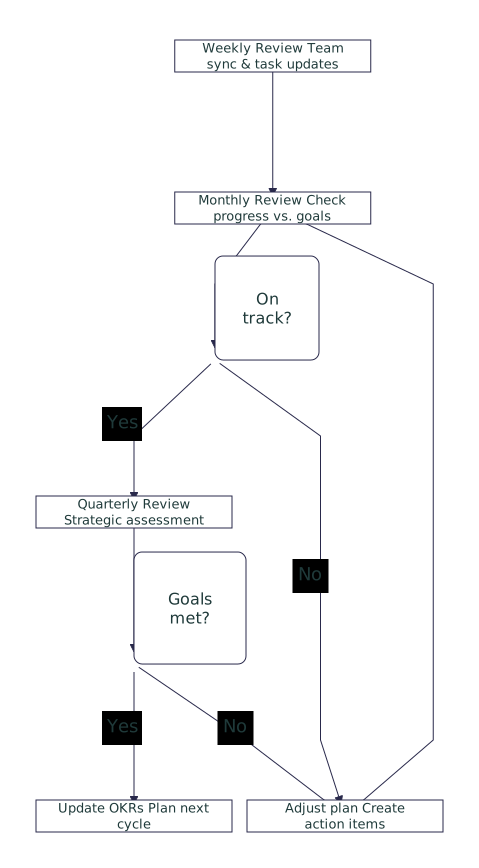
The magic that transforms a static budget into a dynamic tool is your budget review process cadence. A single annual review is useless; a daily grind is unsustainable. The solution is a layered rhythm: quick, medium, and deep check-ins that each serve a distinct purpose.
The 5-Minute Daily Check-in (Awareness)
Agenda: Open your budgeting app or glance at your spreadsheet. Don’t change anything. Just observe your current category balances. This isn’t about logging or fixing—it’s about maintaining awareness. It reminds you of your plan before you spend, which naturally influences decisions. This daily habit builds the financial mindfulness that makes everything else easier.
The 30-Minute Weekly Reconciliation (Accuracy)
Agenda: This is your system maintenance. Reconcile your accounts (ensure every transaction in your tool matches your bank statement). Categorize any stragglers. Look at the past week’s spending. The goal here is accuracy and catching small issues before they become monthly crises. This regular expense review schedule is the backbone of trust in your system.
The Hour-Long Monthly Review (Strategy)
Agenda: After your final weekly check-in of the month, conduct a deeper monthly money review. Look at the entire month’s totals. Did you consistently overspend in one category? Did you have money left over in another? This is where you execute the “Adjust” phase of your workflow. Based on the data, you consciously reallocate funds for the coming month. This strategic session is where you move from tracking to truly directing your money.
Troubleshooting and Course Correction
Every system has breakdowns. The mark of a resilient budget maintenance process isn’t that it never fails, but that it has a clear recovery protocol. Here’s how to handle common hiccups.
Missed a week of tracking?
The Fix: Don’t try to retroactively log two weeks of receipts. Instead, use your bank’s online statement to import or categorize the missing transactions in one batch during your next weekly session. The goal is to get current, not perfect. Forgive the gap and restart the rhythm.
Consistently overspending in one category?
The Fix: This isn’t a failure; it’s data. First, check if your spending was truly frivolous or if your initial budget was unrealistic (e.g., a $400 grocery budget for a family of four). If it’s the latter, adjust your budget upward for the next month and reduce a less critical category to compensate.
Feeling burned out by the review process?
The Fix: Simplify. Reduce your category count. Switch from manual entry to auto-import for a month. Scale back to just the weekly reconciliation until it feels manageable again. Consistency with a simpler system beats a complex system you abandon.
Common Budget Tracking Pitfalls (And How to Sidestep Them)
Knowing where others stumble helps you build a more robust path. Here are the frequent mistakes that undermine a personal budget system and how to avoid them.
The Mistake: Creating Too Many Categories
The Fix: Over-granularity leads to confusion and burnout. Start with broad buckets. You only need to separate expenses if you would make a different decision about them. “Dining Out” and “Groceries” are usefully different; “Starbucks” and “Local Coffee Shop” probably aren’t.
The Mistake: Treating the Budget as Immutable Law
The Fix: Your budget is a plan, not a prison. If an unexpected car repair blows your auto maintenance category, it’s not a “fail.” It’s a signal to adjust other categories this month or next. The power is in the conscious decision to reallocate, not in never deviating.
The Mistake: Skipping the Monthly Strategic Review
The Fix: Weekly tracking without monthly adjustment is like driving while only looking at the hood of your car. You see every bump but have no sense of direction. Protect that monthly hour. Its purpose is to use the data you’ve collected to intentionally steer your financial future.
The Mistake: Conflating Tracking with Self-Judgment
The Fix: The numbers are neutral data. “I spent $200 on dining” is a fact. “I’m terrible with money because I spent $200 on dining” is a destructive story. Practice separating the observation from the evaluation. The system works for you, not against you.
Your Next Step to Financial Clarity
The entire purpose of designing a budget tracking workflow and rhythm is to replace financial anxiety with informed confidence. You now have the blueprint: a four-phase cycle to process transactions and a three-tiered cadence to review them. This isn’t about achieving a perfect, unbroken streak of tracking. It’s about building a system so resilient that a missed week or an unexpected expense is just a minor detour, not a reason to quit.
The most powerful action you can take is to start the rhythm. Open your calendar right now and schedule a 30-minute event for your first weekly reconciliation this coming Sunday. Put it in your phone. When the reminder pops up, you’ll have begun the process of turning intention into habit. The control you’re looking for comes from consistency, not complexity. Start your engine.
A sustainable approach to managing your money hinges on two interconnected ideas: a systematic workflow and a consistent review rhythm. The workflow—Capture, Categorize, Review, Adjust—ensures every dollar is accounted for and informs your plan. The rhythm—a quick daily check-in, a focused weekly reconciliation, and a strategic monthly review—transforms that data into actionable insight without burnout.
Remember, the goal of this entire system is financial clarity, not perfection. Your budget is a tool for making better decisions, not a report card. By implementing these structured yet flexible protocols, you move from reacting to your finances to consciously directing them.