You stare at your bank statement, scrolling through a list of digital transactions that feel more like abstract data than your actual life. The coffee here, the takeout there, the “quick” online purchase—it all blurs into a number that’s lower than you expected, leaving you with that familiar, vague unease about where your money actually went. This disconnect between spending and feeling is precisely why the tactile, visual method of cash envelope organization basics is having a major moment. It’s not about reverting to the stone age or living with deprivation; it’s about replacing that digital fog with physical clarity. Imagine knowing, with absolute certainty, exactly how much you have for groceries this week by simply feeling the cash in a labeled envelope. This system transforms your budget from a passive tracking exercise into an active, intentional tool. It’s a hands-on practice in financial awareness, where the simple act of pulling bills from an envelope makes the cost of your choices vividly real, empowering you to spend with purpose and confidence.
Cash envelope organization basics involve dividing your budgeted spending money into physical, labeled envelopes for categories like groceries, dining out, and entertainment. This creates a clear, visual limit for each category, making it impossible to overspend once the cash is gone. The core benefit is building a tangible connection to your money, which naturally encourages more mindful spending and stops budget leaks before they happen.
Before You Buy an Envelope: The Essential Mindset Shift
The power of the cash envelope system isn’t in the paper or the cash itself. It’s in the fundamental shift it creates in your relationship with money. Digital spending is abstract—a swipe, a tap, a number that changes on a screen. It’s easy to become detached from the reality of those transactions. Physical envelope budgeting reintroduces friction, intention, and a powerful visual feedback loop.
Think of each envelope not as a restriction, but as a dedicated container for your priorities. When you see the cash inside, you’re seeing your “Dining Out” budget for the month, not just an abstract portion of your checking account. When you spend from it, you physically feel the money leave your hands, creating a tangible connection between your purchase and your financial plan. This system is less about deprivation and more about creating conscious awareness. It turns budgeting from a passive tracking exercise into an active, tactile process of resource allocation.
Your Cash Envelope Toolkit: Supplies Beyond the Obvious
A successful envelope budgeting setup requires a few key tools, but you likely have most of them already. The goal is to choose items that make the system durable and convenient for you, removing friction from the routine.

The Envelopes Themselves
Your choice here dictates portability and longevity. Standard paper envelopes are the classic, zero-cost start. For more durability, consider laminating paper envelopes or using small clasp envelopes. For those who want an all-in-one solution, dedicated cash envelope wallets with multiple labeled slots are a popular upgrade. The best choice is the one you’ll actually use and carry.
Organization & Tracking Tools
You’ll need a pen or marker for labeling. A simple notebook or a notes app on your phone serves as your planning ledger—this is where you’ll calculate your allocations before you withdraw cash. A calculator is essential. Finally, designate a secure “home base” for your cash budget envelopes when you’re not using them, like a locked drawer or a small lockbox. This keeps your system organized and your cash safe.
The Setup: Labeling, Allocating, and Your First Cash-Out
This is where your plan becomes physical. A smooth start is crucial for building momentum, so follow these practical do’s and don’ts.
Do start with 3-5 broad categories. Think: Groceries, Dining Out, Fuel, Personal Spending, Entertainment. You can always get more granular later. Don’t create envelopes for fixed, auto-paid bills like your rent or Netflix subscription. The cash system is for your variable, discretionary spending where oversight is most needed.
Do use clear, specific labels. “Fun Money” is better than “Misc.” Don’t skip the calculation step. Using your budget, determine the exact cash amount for each category for the pay period (e.g., $400 for Groceries this month).
For your first cash-out, plan to visit your bank or ATM. Withdraw the total amount you’ve calculated for all your categories. Safety first: be discreet, go during daylight hours if possible, and go straight home to distribute the cash.
Your First Distribution: A Quick Guide
- Gather your labeled envelopes in your secure home base.
- Have your calculated amounts handy (from your notebook or app).
- Count out the cash for each envelope, double-checking the total.
- Place the cash inside and seal or clasp the envelope.
- Put the filled envelopes back in their secure spot. You’re ready.
Building the Routine: Daily Habits and Weekly Check-Ins
The setup gets you 50% of the way. The other 50% is the simple, repeating routine that makes the system sustainable. This is where cash envelope organization becomes a true habit.
The Daily Flow: Before you leave home, grab only the envelopes you might need. At the store, pay with the envelope’s cash. Any change or receipt goes right back into that same envelope before you do anything else. This habit is non-negotiable—it keeps the system accurate and prevents loose cash from getting “lost.”
The Essential Weekly Check-In: Once a week, perhaps on a Sunday evening, bring all your envelopes to your home base. This is your audit. Empty each one, count the remaining cash, and compare it to where you should be. Did you overspend on fuel but underspend on dining out? This isn’t a failure; it’s invaluable data. You can make a small, conscious adjustment by moving a few dollars between envelopes if your rules allow it.
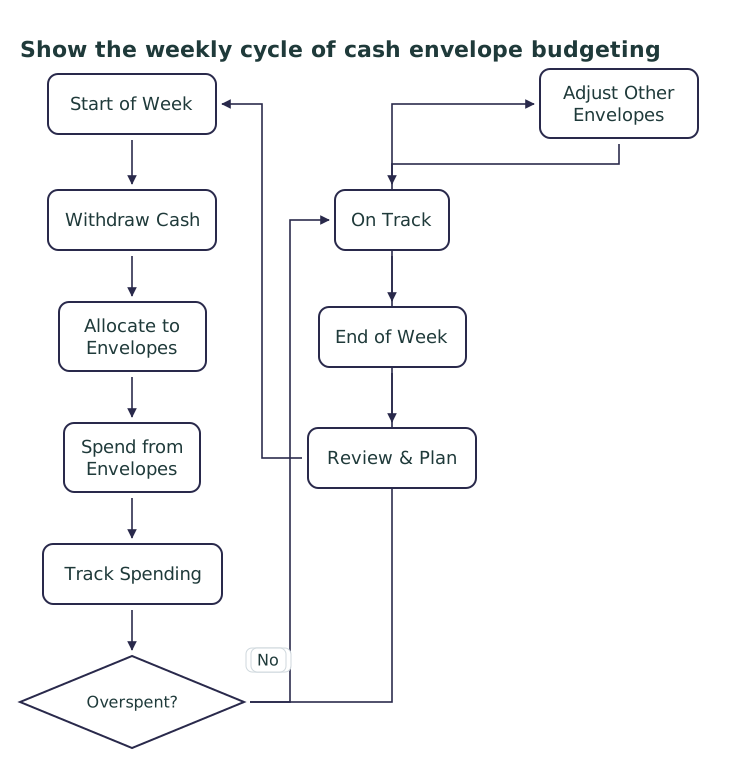
Imagine this scenario: It’s Friday. You open your “Entertainment” envelope and find only $5 left, but you were hoping to see a movie. Your weekly check-in last night showed your “Groceries” envelope is ahead of schedule. You consciously decide to move $20 from Groceries to Entertainment, acknowledging the shift in your priorities for the week. This is intentional spending in action.
Common Cash Envelope Stumbles (And How to Recover)
Every new system has hiccups. Anticipating these common stumbles removes the panic and keeps you on track without self-judgment.
The Stumble: You run out of cash in your “Groceries” envelope with a week left in the month.
The Fix: First, pause. Can you pull from another category? If not, this is critical feedback. Next month, you may need to allocate more to groceries or scrutinize your shopping list. For now, use this as a learning point, not a reason to quit.
The Stumble: You need to make an online purchase, but your money is all in cash.
The Fix: This is where your tracking ledger is key. If you need to buy a digital gift card or pay a bill online, “convert” the cash. Move the physical cash from its envelope to your savings, then make the online purchase from your checking account. Immediately record this transfer in your ledger to keep your categories accurate.
The Stumble: The system feels too rigid or complicated.
The Fix: Simplify. Reduce your categories to the bare essentials. Remember, the envelope method setup is a tool for you. Bend the rules if it means you’ll stick with it. The goal is awareness and control, not perfection.
Embracing the Learning Curve
Your first month with cash budget envelopes will be a learning experience. You might forget an envelope at home, or a category amount might be completely off. That’s not failure—it’s the system giving you clear, immediate feedback that a spreadsheet never could. This friction is where the real financial education happens.
The ultimate goal of this tangible practice isn’t to use cash forever. It’s to build such a strong sense of your spending habits and limits that this awareness eventually translates back to your digital financial life. You’ll develop a “mental envelope” for your categories, spending with the same intention even when using a card. Start with the physical to master the principle. The confidence you gain is the real, lasting currency.
The core of cash envelope organization is a simple, powerful sequence. First, adopt the mindset of intentional, visual spending. Then, gather a basic toolkit: durable envelopes, labels, a secure home base, and a planning ledger. The setup involves labeling a few key spending categories, calculating your cash allocations, and safely withdrawing and distributing the money.
The system comes alive through routine: daily habits of using and returning change, and a crucial weekly check-in to audit and adjust. When you stumble—and you will—see it as data, not defeat. The power lies in the system’s tangible simplicity, transforming abstract budgets into physical reality and building lasting financial confidence.