Does tracking every coffee purchase make you a budgeting pro, or just burn you out? This is the core dilemma when choosing between daily vs weekly expense tracking. The truth is, there’s no single “best” frequency for everyone. The right choice depends entirely on your personality, your financial goals, and what you can realistically stick with long-term. Some people thrive on the minute-by-minute awareness of daily logging, while others find that a weekly review offers the perfect balance of control and sanity. Let’s cut through the noise and figure out which method will actually work for your life, so you can build a budgeting routine that lasts instead of one that frustrates you into giving up.
The best way to choose between daily and weekly expense tracking is to assess your personality and goals. If you’re detail-oriented and need tight control, try daily tracking. For most people, weekly tracking offers a better balance of awareness and sustainability, preventing burnout. Your current financial stress level and the consistency of your income are also key deciding factors.
The Core Trade-Off: Awareness vs. Sustainability
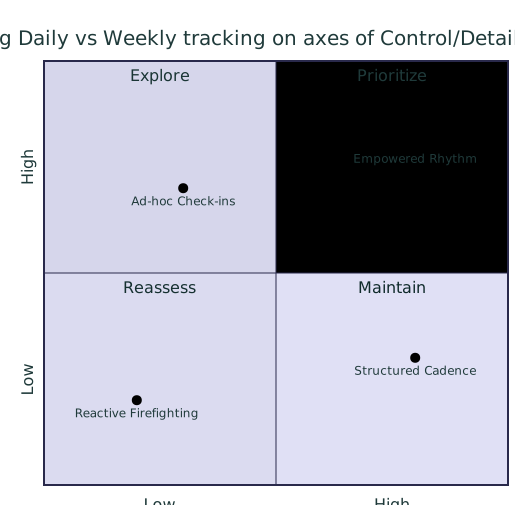
At its heart, the choice between daily and weekly expense tracking is a balancing act between two powerful forces: the depth of your financial awareness and your ability to stick with the routine long-term. Neither method is inherently “better,” but each serves a different master.
Daily expense tracking offers a microscope on your money. Logging every coffee, toll, and snack provides hyper-awareness and immediate feedback. This can be incredibly powerful for stopping small, unconscious leaks in your budget. However, this high level of detail comes with a cost: a significant time commitment and a heavy psychological load. The risk of feeling overwhelmed or burnt out is real, which can lead to abandoning your budgeting tracking routine altogether.
Weekly expense tracking, on the other hand, provides a wider-angle lens. Setting aside time once a week to log your spending from the past seven days is far more forgiving. It’s easier to sustain, reduces friction, and still gives you enough data to spot trends and catch problem areas before your monthly budget is blown. The trade-off is that smaller, impulsive purchases can fade from memory, making it easier to slightly overshoot category limits.
| Dimension | Daily Tracking | Weekly Tracking |
|---|---|---|
| Time Commitment | High (5-10 mins/day) | Low-Moderate (20-30 mins/week) |
| Psychological Load | High (constant vigilance) | Low (scheduled review) |
| Error Forgiveness | Low (miss a day, data is messy) | High (easier to estimate/catch up) |
| Best For | Detail-oriented personalities; urgent goals like debt payoff; variable income. | Beginners; big-picture thinkers; building consistent habits; most long-term goals. |
| Worst For | Those prone to perfectionism or overwhelm. | Those with very tight cash flow needing minute-to-minute control. |
Who Thrives with Daily Tracking? (The Micro-Manager Profile)
Daily tracking isn’t for everyone, but for certain people in specific situations, it’s the perfect tool. This method shines when you need maximum control and immediate data. If you’re naturally detail-oriented and get satisfaction from checking items off a list, you might find the daily ritual rewarding rather than draining.
Financially, tracking expenses daily is most effective when you’re in a “firefighting” mode. This includes aggressively paying off high-interest debt, where every dollar’s destination needs to be justified. It’s also invaluable for people with irregular income, like freelancers or gig workers, who must manage cash flow carefully to ensure bills are covered. The daily check-in acts as a real-time dashboard, preventing surprises.
A word of caution: the very strength of this method—its precision—can become a weakness. If you miss a day, the temptation to give up entirely can be strong. The key is to view it as a tool for a season, not necessarily a lifelong sentence. For more on building sustainable financial habits, the Consumer Financial Protection Bureau offers excellent guidance on money management.
Why Weekly Tracking Wins for Most People
For the majority of people looking to get a handle on their finances, weekly expense tracking is the recommended starting point. Its greatest advantage is sustainability. The act of tracking becomes a manageable weekly appointment, not a daily chore, which dramatically increases the odds you’ll stick with it for months and years.
This frequency aligns well with the natural rhythm of life. You get a meaningful chunk of data (a full week’s spending) that’s recent enough to remember, but not so immediate that it feels oppressive. It provides perfect visibility for common goals like building an emergency fund or saving for a vacation, where trend-spotting is more valuable than penny-precision. You can easily see if your “dining out” category is creeping up every Thursday, for example.
This approach embraces the “good enough” principle of personal finance. Consistency with a slightly less detailed system almost always beats a perfect, detailed system that you abandon after three weeks. By choosing a weekly expense tracking routine, you prioritize building a lasting habit of financial awareness, which is the true foundation of any successful budget.
Your Personal Decision Checklist
Instead of getting stuck in analysis paralysis, use these straightforward questions to guide your choice. Your honest answers will point you toward the method that fits your life.

1. What’s your personality with details? Do you love spreadsheets and itemized lists, or do they make you feel boxed in? If you lean toward the former, try daily. If the latter, start weekly.
2. What’s your primary financial goal right now? Is it an urgent, aggressive goal (like debt payoff) requiring extreme control? Go daily. Is it a broader, longer-term goal (like building savings)? Weekly is likely sufficient.
3. How consistent is your income and spending? If both are highly variable (e.g., freelancing), the control of daily tracking can provide crucial stability. If you have a steady paycheck and routine, weekly tracking can effectively monitor it.
4. What’s your tolerance for routine? Be realistic. Will you genuinely open an app every single day, or is a dedicated Sunday evening session more your style? Choose the path of least resistance.
If you’re still unsure after these questions, the safest bet is to track spending weekly. It’s the lower-friction option that allows you to build the habit first. You can always increase the frequency later if you feel you need more granular control.
Find Your Rhythm and Start Tracking
The debate between daily and weekly tracking isn’t about finding the one “right” answer for everyone. It’s about finding the right rhythm for you—one that provides enough insight to reach your goals without becoming a source of stress. Your ideal money tracking schedule is the one you’ll actually do.
If you’re new to this or have struggled with consistency in the past, make the easy choice: commit to a weekly review for the next month. Set a recurring calendar reminder. Use that time to log your past week’s transactions and glance at your budget categories. After the trial period, assess. Do you feel informed but not overwhelmed? Great. If you feel in the dark, consider testing a daily log for a week.
The most powerful budget is the one you use. Stop overthinking the perfect frequency, pick a method based on your checklist, and start today. The clarity you gain from simply paying attention will be worth far more than any theoretical perfection.