
If your household budget feels like a monthly source of tension, the culprit likely isn’t your spending—it’s your “meeting.” The friction most families and couples experience stems from chaotic, reactive financial discussions, not the numbers themselves. You might have a spreadsheet, but what you lack is a true household budget organization workflow: a repeatable, systematic process that transforms money management from a dreaded chore into a functional, low-stress routine. This approach moves beyond mere tracking to embed clear communication, defined roles, and decision rules into the rhythm of your month, aiming not for perfect control but for predictable peace.
A household budget organization workflow is a systematic, repeatable process that combines planning, tracking, communication, and role assignment to manage shared finances with less friction. It moves beyond a static spreadsheet to create a dynamic, collaborative system that prevents surprises and reduces monthly arguments. The goal is to build a reliable home budget management system that runs quietly in the background, empowering you to focus on your financial goals rather than daily money anxiety.
Here’s how to build a household budget organization workflow that actually sticks: start by separating the ‘planning’ and ‘tracking’ phases, schedule a brief weekly money meeting, assign clear roles (like ‘payer’ and ‘reviewer’), and use a simple digital hub for all bills and goals. The goal isn’t perfection, but a predictable, low-friction system that prevents financial surprises and arguments.
Myth vs. Fact: What a Budget Workflow Really Is (And Isn’t)
Before we build a system that works, we need to clear away the mental clutter. Many people approach household budget organization workflows with assumptions that set them up for frustration. Let’s replace those myths with the practical facts that form the foundation of a sustainable system.
Myth: A budget is just a spreadsheet.
Fact: A spreadsheet is a tool, not a system. A true household budget organization workflow is the living process that surrounds that tool—the communication, the regular check-ins, and the decision rules you follow. It’s the difference between having a map and actually navigating the terrain together.
Myth: We need to track every penny perfectly.
Fact: Perfection is the enemy of progress. A functional family budgeting routine aims for directional accuracy, not forensic accounting. The goal is to understand your spending patterns and stay aligned on goals, not to account for the exact $3.47 coffee. Chasing perfection creates friction that causes the entire system to collapse.
Myth: Budgeting is a solo activity for the “finance person.”
Fact: Effective shared budget organization requires, well, sharing. Even if one person handles the day-to-day admin, both parties need visibility and a voice in planning and goal-setting. A workflow defines how information flows between everyone involved, preventing the “silent partner” dynamic that breeds resentment and surprise.
Myth: Once the budget is set, we’re done.
Fact: A budget is a hypothesis about your month. Life is the experiment. A workflow builds in regular review and adjustment points, treating your budget as a dynamic, iterative plan. This isn’t a failure; it’s the system working as designed, adapting to reality. Remember, these principles are educational starting points. Your specific home budget management system should adapt to your household’s unique rhythm, not the other way around.
The Two-Phase Household Finance Engine
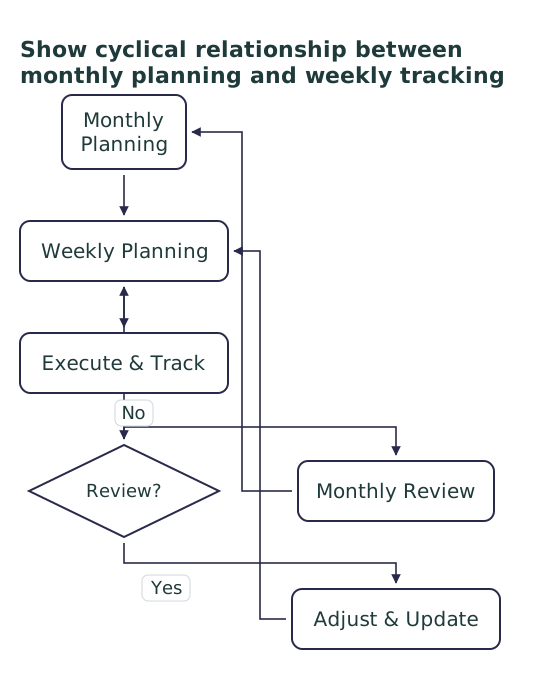
The core of a low-friction system is separating two distinct mental tasks: high-level planning and granular tracking. Merging them causes overwhelm. By creating a clear family finance organization process with two dedicated phases, you create a predictable rhythm that reduces monthly money stress.
The Planning Phase (Monthly/Quarterly)
This is your strategic session. Its purpose is to look ahead, set targets, and allocate your income. This phase answers the question: “What do we want our money to do?” Key activities include reviewing your income, setting or updating savings goals (like a vacation or emergency fund), and allocating amounts to spending categories (groceries, utilities, fun money). The output is an agreed-upon plan for the upcoming period. This phase requires both partners’ participation to ensure shared ownership of goals and priorities.
The Tracking Phase (Weekly)
This is your tactical maintenance. Its purpose is to compare reality to your plan, log spending, and ensure nothing is falling through the cracks. This phase answers the question: “How are we doing against our plan?” Key activities involve a quick sync-up, logging transactions from the past week into your chosen tool, and paying any bills due. The output is an updated financial picture and awareness of whether you’re on track. This phase can often be handled by one person, with a brief report to the other.
The magic is in the link between them. The weekly tracking feeds real data back into the monthly planning, making each cycle smarter and more realistic. This turns a static budget into a true household money workflow.
Scenario: A Week in the Life of an Organized Budget
Concepts are great, but how does this actually look? Let’s follow Alex and Sam, who use a simple two-phase system. It’s the last weekend of the month, so they sit down for their 30-minute Planning Phase. They confirm their next month’s income, agree to allocate an extra $100 to their car repair fund, and set their grocery budget based on the previous month’s average spend. The plan is set in their shared budgeting app.
Now, the Tracking Phase kicks in. On Monday, Sam, who is the designated “payer” this month, logs in and schedules all the rent and utility bills for automatic payment. On Thursday evening, during their scheduled 10-minute “money check-in,” Alex quickly imports the week’s credit card transactions from their shared account into the app. They see they’re halfway through their dining-out budget already because of a friend’s birthday dinner. No panic—they simply agree to cook at home for the next few weekends to compensate. This is the system in action: a small, expected course correction within the workflow.
At the end of the month, their review is easy. The app shows they overspent on groceries but underspent on gas. They discuss whether the grocery target was unrealistic or if it was a unique month, and adjust the next month’s plan accordingly. The friction and big, stressful “budget meetings” are gone, replaced by a brief, routine maintenance of their shared financial management workflow.
Do’s and Don’ts for Designing Your Workflow
Implementing the two-phase model is about behavior as much as it is about math. These practical do’s and don’ts will help you design a family budgeting routine that sticks, focusing on reducing points of failure.

Do:
- Assign a “Finance Lead” for Admin: Designate one person to be responsible for the weekly tracking tasks (logging transactions, paying bills). This prevents tasks from falling into a “someone should do that” void.
- Use a Single Notification Hub: Have one dedicated email address or folder for all bills, financial statements, and account alerts. This eliminates the hunt for statements across multiple inboxes.
- Schedule the Weekly Check-In: Put a 15-minute recurring event called “Money Sync” on your shared calendar. Protect this time like any other important appointment.
- Celebrate Small Wins: Acknowledge when you stick to your plan or hit a mini-goal. This positive reinforcement builds momentum and makes the process feel rewarding.
Don’t:
- Have Money Talks When Tired or Stressed: Serious financial planning requires clear heads. If a discussion gets heated, table it and revisit during your next scheduled slot.
- Use More Than 2-3 Tools: Complexity kills consistency. Choose one app for budgeting, one account for bills, and communicate there. Avoid spreading data across six different spreadsheets and notebooks.
- Ignore Small Discretionary Spending: While you don’t need penny-perfect tracking, consistently ignoring small cash or card purchases creates a “black hole” that derails your category budgets. Aim to capture the majority of spending.
- Make It a Blame Game: Frame overspending as a “plan vs. reality” issue to solve together, not a personal failing. The workflow is a tool for teamwork.
Your Workflow Foundation Checklist
- We have a shared digital tool (app or spreadsheet) we both can access.
- We have a single, dedicated place where all bills and statements arrive.
- We have a recurring calendar event for our weekly 10-15 minute check-in.
- We have clearly agreed on who handles the weekly transaction logging.
- We know the date for our next monthly/quarterly planning session.
Common Workflow Breakdowns (And How to Fix Them)
Even the best-designed systems can stall. The key is not to see these as failures, but as predictable friction points. Here are the most common breakdowns in a shared budget organization system and simple, immediate fixes to get back on track.
Breakdown: “The Silent Partner”
What happens: One person handles everything, and the other is completely disengaged. This leads to surprise, lack of buy-in, and resentment when spending limits are “suddenly” enforced.
The Fix: At the next planning session, the engaged partner presents a simple, one-page snapshot of finances and goals. Then, ask the disengaged partner to choose one category or goal they want to be the “owner” of tracking for the next month (e.g., “entertainment budget” or “vacation fund progress”). This creates a small, manageable point of connection.
Breakdown: “The Receipt Black Hole”
What happens: Receipts pile up in wallets, bags, or on the counter, and the weekly logging session becomes an archeological dig. The task feels overwhelming, so it gets skipped.
The Fix: Implement a “daily 2-minute dump.” Designate a specific bowl, drawer, or even take a photo into a shared album immediately after purchase. The goal isn’t to categorize it then, just to get it out of your head and into a single, agreed-upon collection point for the weekly log.
Breakdown: “The Calendar Ghost”
What happens: The weekly check-in isn’t on the calendar, so it gets forgotten or pushed aside by other priorities every single week.
The Fix: Right now, open your shared digital calendar. Create a recurring event for the same day and time every week (e.g., “Sunday 7:00 PM – Money Sync”). Set a notification. This is non-negotiable infrastructure for your budgeting routine for couples.
Breakdown: “Tool Fatigue”
What happens: You started with an app, then added a spreadsheet for goals, then a notebook for cash, and now it’s too complicated to maintain.
The Fix: Conduct a “tool audit.” List every place you track financial information. Choose one as your single source of truth. Commit to using only that tool for one full month. Manually transfer any essential data from the others, then close or ignore the redundant tools. Complexity is the enemy of execution.
Toward Financial Peace, Not Perfect Control
The ultimate goal of implementing a household budget organization workflow isn’t to achieve a flawless, color-coded financial masterpiece. It’s to build a “good enough” system that runs reliably in the background of your life. When you have a predictable rhythm for planning and checking in, money becomes a managed part of your household operations, not a recurring source of anxiety or conflict.
This workflow is a tool for creating financial peace and partnership. It’s designed to catch small issues before they become big arguments, to make progress toward goals visible, and to transform what is often a tense discussion into a brief, functional routine. Start by implementing just one or two pieces—the weekly calendar invite and a single tool, for instance. Let the system prove its value by reducing friction, not by demanding perfection from day one. Your sustainable, low-stress family finance organization process is built one consistent habit at a time.
A sustainable household budget organization workflow moves beyond a static spreadsheet to a dynamic, communicative system. The core model is a two-phase engine: a Monthly Planning Phase for setting goals and allocating funds, and a Weekly Tracking Phase for logging spending and making minor adjustments. This separation of strategy and tactics is key to reducing overwhelm.
Success hinges less on the specific tools and more on foundational behavior shifts: scheduling a brief weekly money check-in, assigning clear roles (like a “finance lead” for admin), and using a single digital hub for all bills and statements. Remember, the aim is a predictable, low-friction routine that prevents financial surprises and supports shared goals—where sustainability consistently beats complexity.