You open your banking app, ready to log a quick coffee, and your heart sinks. The balance is lower than you expected, and scrolling down reveals a handful of purchases—a gas station stop, a pharmacy run, that lunch you grabbed—that you completely forgot to record. That familiar wave of budget panic hits: your carefully planned categories are now a mystery, and the idea of untangling it feels overwhelming. First, take a breath. This moment of discovering missed transactions in your budget is a universal experience, not a personal failure. Whether it’s a few forgotten expenses or a two-week tracking blackout, the gap between your records and reality is always fixable. The key isn’t starting over or striving for perfection; it’s having a clear, calm protocol to follow. This guide is that playbook: a straightforward, step-by-step method to quickly reconcile your accounts, close those budget tracking gaps, and give you a clean slate to resume with confidence.
To quickly fix missed transactions in your budget, stop new spending temporarily, collect all your financial data from statements and apps, then dedicate a single session to log everything at once. Reconcile the totals with your accounts, adjust your category balances, and resume tracking with a simplified system to prevent future gaps. This focused “data blitz” approach turns a chaotic catch-up into a manageable, one-time task, getting you back on track in under an hour.
The 5-Step Catch-Up Protocol
Let’s fix those budget tracking errors with a systematic, one-session process. This protocol is designed to clear the fog, give you an accurate financial picture, and get you back on track without the overwhelm. Follow these steps in order.
1. Pause & Gather
First, hit the mental pause button. Trying to log new spending while you’re untangling old unrecorded spending is a recipe for more confusion. For the next hour or two, commit to the catch-up process itself. Open your banking app and note your current balance, but don’t log any new transactions yet. This step is about creating a clean workspace for your budget catch-up process.
2. The Data Blitz
Your mission is to collect every digital and physical record of spending from the period you missed. We’ll detail exactly where to look in the next section. For now, know this is about gathering all the puzzle pieces—bank statements, credit card transactions, digital payment histories, and that pile of receipts—in one place before you start entering anything.
3. Log & Categorize
Now, with all your data in front of you, start entering. Whether you use a spreadsheet, an app like YNAB or Mint, or a notebook, log every transaction. Don’t get bogged down in perfect categorization; a best guess is fine for now. The goal is to get the amounts recorded. This focused session is the core of how you catch up on expense tracking efficiently.
4. The Reconciliation Check
This is the crucial quality control step. Once everything is logged, compare the total of your entered expenses (plus any income) to the actual change in your bank and credit card balances over the same period. Do the numbers match? If you’re off by a small amount, it might be a forgotten fee or a rounding error. If it’s a large discrepancy, quickly scan your statements again for any forgotten expenses you might have skipped.
5. Reset & Resume
Your budget is now current. Take a final moment to update the available balances in your spending categories to reflect reality. This might mean some categories are in the red—that’s okay, now you know. Then, close your catch-up session. You’ve successfully completed reconciling missed transactions. You can now resume logging your spending as it happens, starting with a clean, accurate slate.

Photo by www.kaboompics.com on Pexels
Your Mini-Checklist for the Data Blitz
To fix budget tracking gaps, you need all the data. This checklist ensures you leave no stone unturned during Step 2 of the protocol. Work through it methodically.
- Bank & Credit Card Statements: Log into every account. Download or view transactions for the entire period you missed (typically the last 30-60 days).
- Digital Wallets & Payment Apps: Check PayPal, Venmo, Cash App, Zelle, and Apple/Google Pay histories. These are common sources of expense tracking gaps.
- The Physical Receipt Pile: Gather receipts from your wallet, car, bags, and kitchen counter. Don’t sort them yet—just collect.
- Subscription & Auto-Pay Emails: Search your email for “receipt,” “payment confirmation,” or the names of your streaming/services. These automated payments are easily forgotten.
- Cash Withdrawal Notes: If you use cash, check your ATM withdrawal history. While you may not recall every cash purchase, note the total amount withdrawn as a starting point.
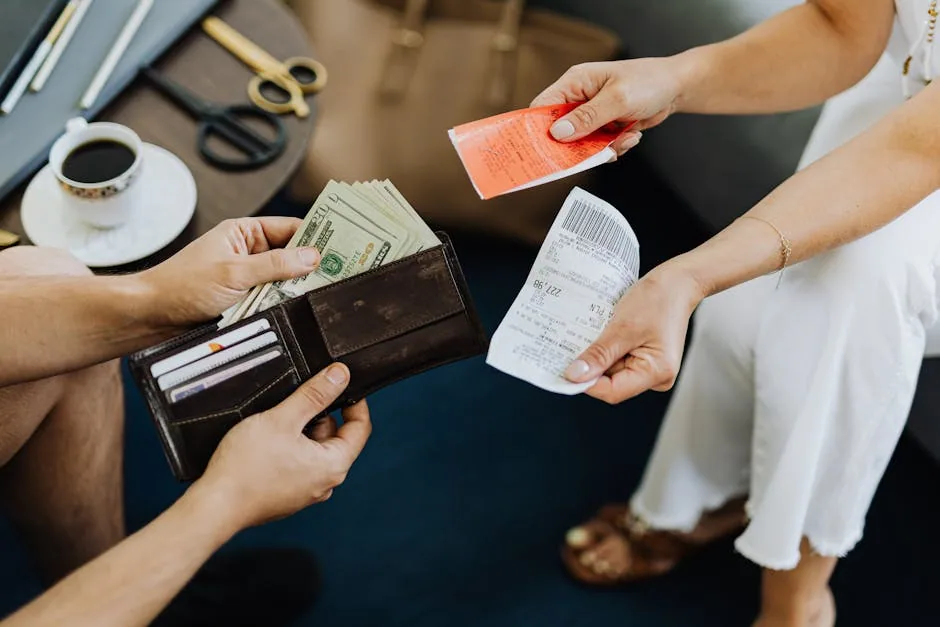
Photo by www.kaboompics.com on Pexels
With this stack of information, you have a complete dataset. You’re not hunting anymore; you’re just transcribing, which is a much faster and less stressful task.
Scenario: The ‘Two-Week Gap’ Triage
Let’s make the protocol concrete. Say you haven’t logged a single thing for two weeks and you’re staring at a dozen unfamiliar charges. Here’s your tailored triage plan.
First, Pause & Gather. Don’t panic. Open your banking app and note today’s balance. Then, perform a Data Blitz, but focus only on the last 14 days of statements and your digital payment apps. For the Log & Categorize phase, prioritize logging the larger, identifiable transactions first (groceries, gas, online orders). For small, vague cash purchases (like a coffee or snack), it’s acceptable to make a single, reasonable estimate (e.g., “$25 for miscellaneous cash lunches”) rather than agonizing over each one. This estimation is for educational budgeting purposes to close the gap, not for precise tax accounting.
Move to the Reconciliation Check. Does your logged total (including your cash estimate) explain the change in your account balance? If you’re within $10-20, you’re close enough. Finally, Reset & Resume. Update your category balances. The entire process for a two-week gap should take 30-45 minutes, and you’ll have eliminated that nagging feeling of financial disarray.
Preventing Future Gaps (The Simple System)
The best way to handle missed transactions in budget is to stop them from piling up. Perfection isn’t the goal—reducing friction is. Implement one of these low-effort habits to maintain momentum.
The Weekly 10-Minute Review: Pick a consistent time (Sunday evening, Monday morning) to open your budgeting app and quickly log any stragglers from the past week. This tiny habit prevents small manual budget entry mistakes from becoming a monthly crisis.
Use Technology as a Reminder: Enable push notifications for transactions from your bank. Each alert can serve as a instant prompt to record the spend in your budget, turning a passive notification into an active tracking tool.
The Daily ‘Wallet Dump’: Make it a ritual to empty your physical wallet of receipts each night and place them in a designated spot (a bowl, a folder). This makes your weekly review even faster. For a deeper dive into building sustainable financial habits, resources like NerdWallet’s budgeting guide offer excellent, structured advice.
The key is to choose the one method that feels easiest for you. Consistency with a simple system beats sporadic attempts at a complex one.
Your Budget, Back in Your Control
Your first step is to open your banking app. Right now. That simple action breaks the cycle of avoidance and starts the recovery. Remember, a budget that’s been caught up and corrected is infinitely more valuable than one that was never perfect to begin with.
You now have a clear, stress-free protocol for those inevitable times when life gets ahead of your ledger. Use it, and then return your focus to what matters—making your money work for you, with clarity and confidence.