When you decide to get serious about your finances, the first piece of advice is almost always to “make a budget.” But here’s the counterintuitive part everyone glosses over: if you simply default to the standard monthly budget template, you might be setting yourself up for frustration and failure. This is especially true if your cash flow is tight, your income fluctuates, or you find yourself constantly doing mental math to see if you can make it to the next payday. The real question isn’t “which budget is better?” but “which budget fits the specific constraints of my financial life?” Choosing between a weekly budget vs monthly budget is a foundational decision that determines whether your plan feels like a helpful map or a stressful straitjacket.
What is the best way to choose between a weekly and monthly budget? The best way is to match the budget’s rhythm to your cash flow. If your income is variable or you live paycheck-to-paycheck, a weekly budget provides tighter control. If you have a stable salary and want to plan for larger, less frequent expenses, a monthly system is more effective. Your financial constraints, not a generic rule, should guide your choice of a monthly budget vs weekly budget.
When a Monthly Budget Fails You (The Constraints First)

Photo by www.kaboompics.com on Pexels
Many people default to a monthly budgeting system because it seems logical—most bills and paychecks are monthly. But this approach can create significant stress if your financial life doesn’t fit that neat 30-day box. A budget is a tool for clarity, not a test of willpower. When it causes anxiety instead of providing control, it’s often because the timing is wrong.
The Cash Flow Mismatch
The biggest pitfall is a mismatch between when money comes in and when it needs to go out. If you’re paid weekly or bi-weekly but try to manage all your monthly expense tracking at once, you’re forced to mentally juggle money you don’t yet have. This leads to the classic “week three crunch,” where you’re out of cash but still have days until payday.
The Variable Income Problem
For freelancers, gig workers, or anyone with irregular income, a rigid monthly plan is often a guess. Trying to forecast a full month’s earnings and expenses can feel like building a house on sand. When actual income falls short of your monthly projection, the entire plan collapses, leading to frustration and a sense of failure.
The Overwhelm Factor
Budgeting by month requires you to account for every single expense—from rent to that one coffee—over a long horizon. For beginners or those feeling financially fragile, this can be paralyzing. The sheer number of line items and the long commitment can make starting feel impossible, so people don’t start at all.
The Case for a Weekly Budget: Regaining Control
This is where the weekly budgeting method shines. It’s not about doing more math; it’s about aligning your plan with the natural rhythm of your cash flow. By breaking things down into smaller, more manageable chunks, you transform budgeting from a daunting monthly forecast into a practical weekly action plan.
Granularity Equals Awareness
Looking at your finances week-by-week forces a higher level of awareness. You see exactly where your money is going in real-time, making it much harder for small, discretionary spends to silently blow your plan. This granularity is perfect for weekly cash flow planning, helping you ensure there’s always enough for groceries and gas before the next paycheck hits.
Built-In Adaptability
A weekly system is inherently flexible. If an unexpected expense pops up in week two, you can adjust your spending plans for weeks three and four immediately. You’re not locked into a bad forecast for a full month. This adaptability is crucial for those with variable income, as you can adjust your spending each week based on what you actually earned.
Reduced Mental Load
Instead of tracking 30 days of spending, you only need to focus on seven. This makes the process less overwhelming and easier to stick with. It turns budgeting into a quick weekly check-in—a 15-minute habit rather than a monthly accounting marathon. You can learn more about building consistent financial habits from resources like the Consumer Financial Protection Bureau’s guides.
Monthly vs Weekly Budget: A Direct Comparison
The best way to see the difference is side-by-side. Your choice isn’t permanent, but picking the right starting point can make all the difference in building a sustainable habit.
| Criteria | Weekly Budget | Monthly Budget |
|---|---|---|
| Frequency | Plan & review every week. | Plan & review once a month. |
| Best For | Tight cash flow, variable income, beginners, paycheck-to-paycheck living. | Stable salary, long-term goal planning, predictable expenses. |
| Key Advantage | Tight control, high adaptability, reduces mental overwhelm. | Big-picture view, easier for planning large/irregular bills, less frequent maintenance. |
| Key Disadvantage | Can feel micro-managed; requires more frequent check-ins. | Prone to mid-month cash flow crunches; inflexible with variable income. |
| Ideal Income Type | Weekly, bi-weekly, freelance, gig, or irregular income. | Monthly salary or stable, predictable income. |
How to Choose: Your Personal Decision Points
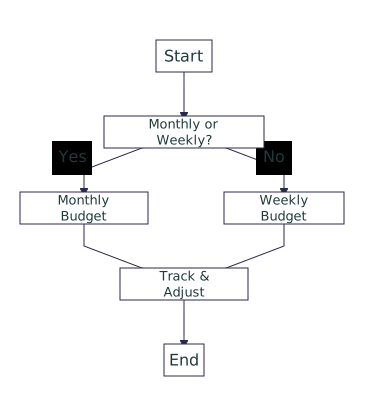
So, which is the best budget frequency for you? Forget generic advice. Ask yourself these practical questions to find your fit.
1. How Predictable Is Your Income?
This is the most critical factor. If your take-home pay changes significantly from one period to the next, a weekly system gives you the agility to adapt. If you receive the same salary on the same dates each month, a monthly budgeting system provides a stable framework.
2. What’s Your Biggest Financial Stress Point?
Is it running out of money before payday? If so, the tighter control of budgeting by week directly addresses that anxiety. Is it forgetting about annual bills or not saving enough? The broader horizon of a monthly plan helps you allocate for those less-frequent costs.
3. How Do Your Bills Line Up?
Map your major bill due dates against your paydays. If all your big bills hit in one week, leaving others sparse, a weekly plan helps you allocate funds to cover those specific crunch times. A monthly plan works well if expenses are evenly spread.
Remember, this is an educational guide to help you start. The right system is the one you’ll actually use consistently. Don’t be afraid to try one method for a month, then switch if it’s not working.
Your Next Step: Commit to a Trial
Overthinking the choice between budgeting weekly or monthly can keep you stuck. The goal isn’t to find the perfect system on day one, but to start gaining control. Here’s your clear next step: pick the option that most closely matches your current constraints and commit to a one-cycle trial.
If your income is variable or cash is tight, try a weekly budget for just two pay cycles. If your finances are stable but disorganized, set up a monthly budget for the coming 30 days. Use that trial period to judge the system based on how it feels—less stress and more clarity are your success metrics, not perfect adherence.
Action builds confidence. Start with one cycle, review what worked, and adjust. Your budget should work for you, not the other way around.
Q: Can I combine weekly and monthly budgeting?
A: Absolutely. A hybrid approach is common and effective. Many people use a monthly budget to allocate funds to broad categories (like rent, savings, debt) and then use a weekly check-in to manage their discretionary spending (like groceries, gas, and entertainment) from what’s left. This gives you both the big picture and short-term control.
Q: Is a weekly budget too much work to maintain?
A: It requires more frequent attention, but each session is much shorter. A weekly review often takes just 10-15 minutes, as you’re only looking at seven days of transactions. For many, this quick, regular habit feels less burdensome than a lengthy monthly reconciliation session that can take an hour or more.
Q: What if I get paid bi-weekly? Which system is better?
A: Bi-weekly pay (every two weeks) often aligns better with a weekly budgeting method. You can budget for each paycheck individually, covering the expenses in the two-week period it needs to fund. Trying to fit two or three bi-weekly paychecks into a single monthly plan is where many people run into cash flow timing issues.
Q: How do I handle large monthly bills (like rent) in a weekly budget?
A: You “break down” the large bill. If your rent is $1,200 due on the 1st, you would allocate $300 from each of your four weekly paychecks (or a proportional amount from each check) into a separate “Rent” holding category. This way, the money is set aside incrementally, so you’re not scrambling to cover the full amount from a single paycheck.