You download the app with the best intentions. You meticulously fill out the spreadsheet on a Monday, only to forget it exists by Wednesday. You feel a vague sense of guilt every time you glance at your phone’s finance folder, a digital graveyard of good intentions. If this cycle of digital budgeting frustration sounds familiar, you’re not alone. For many, the abstract nature of apps and screens creates a disconnect from the reality of our money, turning financial management into a chore we’d rather ignore. The solution, however, might be surprisingly low-tech. Paper budget organization hacks offer a tangible, intentional antidote to this modern overwhelm. By bringing your finances into the physical world—with a binder, some envelopes, and a pen—you create a mindful, visual system that can transform your relationship with money from one of avoidance to one of active, empowered control.
Paper budget organization involves using physical tools—like a binder, cash envelopes, and printable tracking sheets—to create a tangible, visual system for managing your money. This hands-on approach moves your finances from an abstract digital screen into your actual space, forcing a moment of mindfulness with every transaction you record. The act of writing, calculating, and physically allocating cash can lead to greater awareness and discipline compared to the passive, often forgettable, nature of purely digital methods.
Why Paper Budgeting Works: The Psychology of Tangible Money
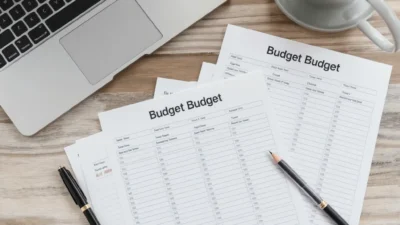
In a world of invisible digital transactions, money can feel abstract—a number on a screen that changes without much thought. Paper budgeting methods counteract this by making your finances physical and visible. The act of writing down an expense, moving cash between envelopes, or coloring in a savings goal creates a tangible connection to your money that a tap or a swipe simply cannot match.

Photo by Polina Tankilevitch on Pexels
The Cognitive Benefits of Going Analog
This hands-on approach leverages several psychological principles. First, it increases mindfulness. The deliberate action of recording a purchase forces a moment of awareness, making you more conscious of where your money goes. Second, it provides visual feedback. Seeing a category’s cash dwindle or a debt tracker fill up offers immediate, visceral reinforcement of your spending habits. Finally, it creates a ritual. Setting aside time for your manual budget tracking transforms money management from a chore into a purposeful practice, building discipline through consistency.
The classic cash envelope system is the ultimate example of this tactile control. When the grocery envelope is empty, you’re done spending. There’s no abstraction, no mental gymnastics—just a physical, undeniable limit. This direct feedback loop is why so many people find success with paper-based budgeting after feeling disconnected using apps alone.
Your Paper Budget Toolkit: Essential Supplies & Printables
You don’t need fancy equipment to start. The goal is functionality, not perfection. Gather these simple supplies to build your analog money management system.
- A Binder or Notebook: A simple 1-inch three-ring binder or a dedicated notebook serves as your financial command center.
- Dividers & Pockets: Use tabbed dividers to separate months, and pocket dividers to hold receipts or loose bills.
- Writing Instruments: Reliable pens (black or blue for main entries, red for overspending alerts) and a pencil for draft calculations.
- A Basic Calculator: For quick totals and to double-check your math.
- Cash Envelopes: Simple white envelopes, decorative ones, or a dedicated wallet with categorized pockets for the cash system.
- A Hole Punch: To add any printed sheets or bank statements to your binder.
Your Core Printable Budget System
While you can create sheets by hand, using a designed printable budget system reduces setup time and ensures you don’t forget key elements. Look for or create these essential templates:
- Monthly Budget Tracker: The master sheet for your income, fixed expenses, variable spending, and savings goals.
- Bill Calendar/Due Date Chart: A simple grid to visualize when payments are due throughout the month.
- Debt Payoff Tracker: A visual chart (like a debt snowball or avalanche) to motivate you as balances decrease.
- Savings Goal Chart: A thermometer or coloring sheet to make progress toward a specific goal feel rewarding.
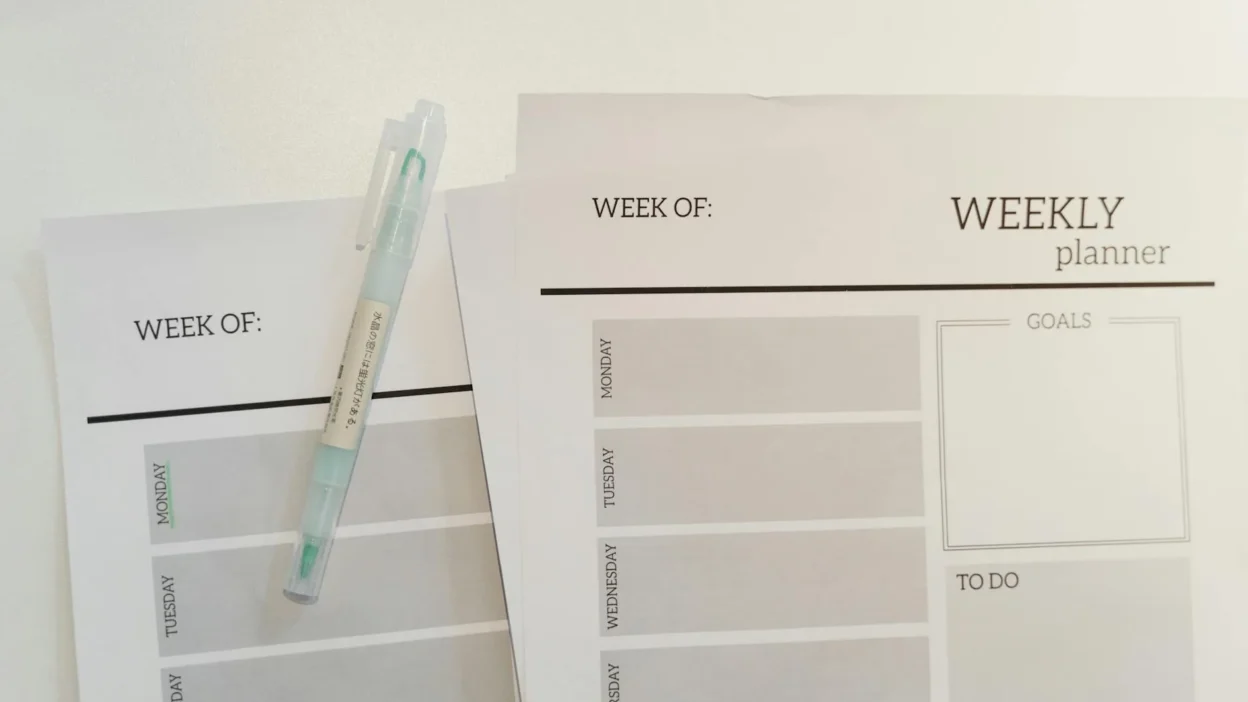
- Weekly Spending Log: A simple form to jot down daily transactions before transferring them to your monthly tracker.
The 10-Step Protocol to Build Your Paper Budget System
This is your actionable playbook. Follow these steps in order to create a complete, functional paper budget from scratch.
- Gather & Commit. Collect your toolkit and decide on a regular time for money management (e.g., Sunday evening). This ritual is the foundation.
- Calculate Your Net Income. Using your pay stubs, determine your total monthly take-home pay. If income varies, use a conservative average from the last 3-6 months.
- List Every Fixed Expense. Write down all non-negotiable monthly costs: rent/mortgage, utilities, insurance, minimum debt payments, subscriptions.
- Track & List Variable Expenses. For one month, write down every single purchase. Categorize them (Groceries, Gas, Dining Out, Entertainment). This reveals your true spending patterns.
- Define Your Financial Goals. Be specific. “Save $1,000 for car repairs by October” or “Pay an extra $200 on Credit Card A.”
- Allocate Every Dollar. Using your printable monthly tracker, assign a job to every dollar of your net income, covering expenses, goals, and a small “fun money” buffer. This is a “zero-based” budget.
- Set Up Your Tracking Sheets. Populate your binder with the current month’s tracker, bill calendar, and goal sheets. Label your cash envelopes if using that method.
- Record Transactions Daily or Weekly. Consistently log spending in your weekly log or directly on your tracker. Don’t let receipts pile up.
- Conduct a Weekly Check-In. Every week, spend 10 minutes comparing your tracked spending to your budgeted amounts. This prevents small oversights from becoming big problems.
- Hold a Monthly Review & Reset. At month’s end, review what worked and what didn’t. Adjust category amounts for the next month, celebrate wins, and set up your new sheets.
Experience Micro-block: Imagine it’s a Tuesday, and you’re tempted by an online sale. Instead of impulsively clicking “buy,” you open your budget binder. You see your “Clothing” category has $15 left for the month, and the item is $45. The physical evidence makes the decision clear: you either wait, decide to move money from another category (and see the trade-off), or pass. That moment of pause, created by your paper system, just saved you $30.
Choosing Your Method: Cash Envelopes, Binder Systems & Hybrids
Not all paper budgeting methods are the same. The best one aligns with your personality and spending triggers. Here’s how to choose.
The Cash Envelope System (For The Overspender)
How it works: You withdraw cash for your variable spending categories (groceries, dining, entertainment) and place the allotted amount into labeled envelopes. You spend only from the designated envelope. When it’s empty, you stop spending in that category for the month.
Best for: Anyone who struggles with impulse control or who finds credit/debit cards too easy to use. The physical limitation is powerful. If you constantly overspend on groceries or “little” purchases, this method creates a hard stop.
The Detailed Binder System (For The Planner & Tracker)
How it works: This is a comprehensive paper-based budgeting system centered on your binder and printable sheets. You track every transaction, reconcile with bank statements, and maintain detailed records of goals and progress. It’s less about restricting cash and more about data and awareness.
Best for: Visual learners, detail-oriented people, and those who want a complete financial snapshot without using a spreadsheet. If you love data, color-coding, and seeing the full story of your money on paper, this is your method.
The Hybrid Approach (For The Realist)
How it works: You use a paper budget planner for planning, goal setting, and tracking broad categories, while using a banking app for transactions and bill pay. For example, you might use cash envelopes for “fun money” but track fixed bills on a printable bill calendar. This blends the mindfulness of paper with the convenience of digital for specific tasks.
Best for: People who pay most bills online but want a tangible process for discretionary spending and goal visualization. It’s a practical compromise for modern financial life.
Designing Effective Printable Trackers & Sheets
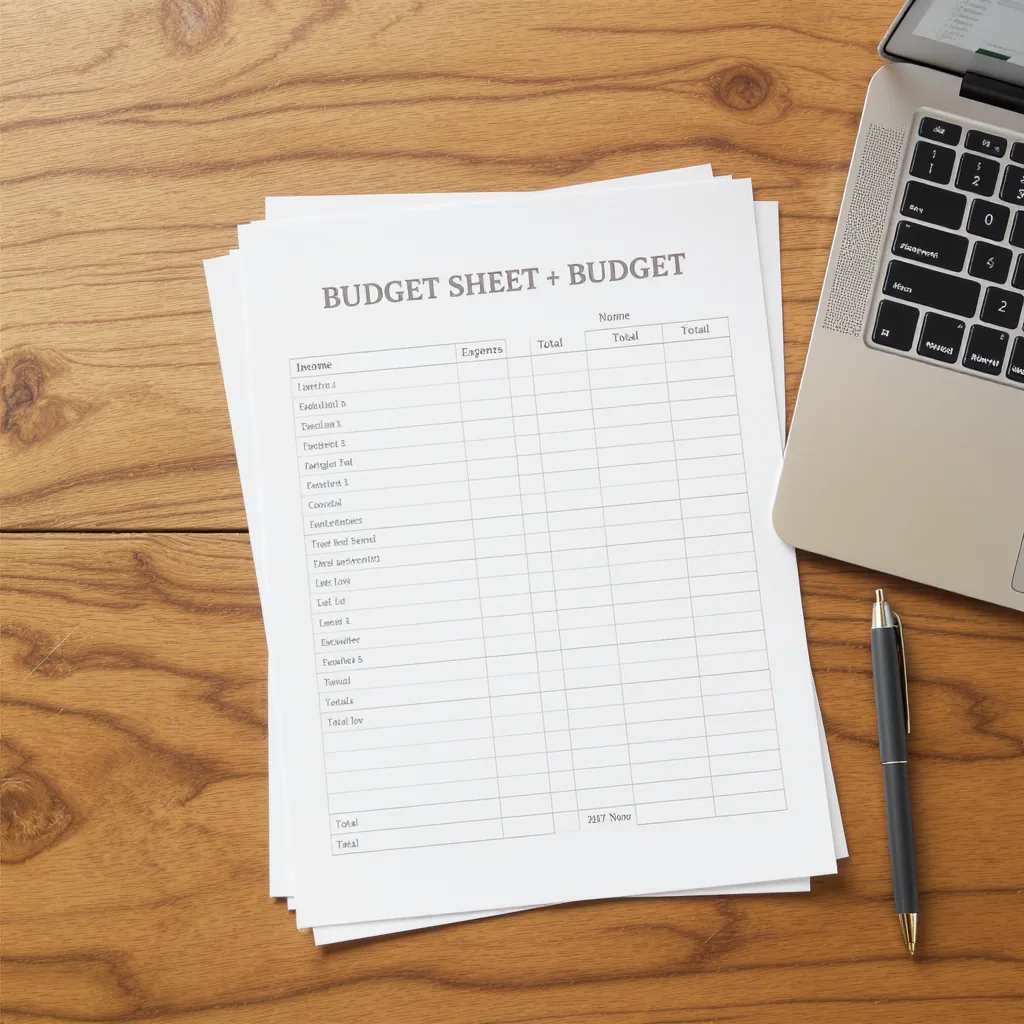
A good printable budget system is clear, functional, and leaves ample space for writing. Whether you download a template or design your own, follow these principles.
Key Elements of a Functional Tracker
- Income Section: Clear lines to list all income sources and a total.
- Expense Categories: Grouped logically (Fixed, Variable, Savings/Debt). Leave a blank line for “Miscellaneous” for unexpected costs.
- Budgeted vs. Actual Columns: This is crucial. You need a column for what you planned to spend and a column for what you actually spent.
- Difference Column: A simple “Actual minus Budgeted” space to instantly see if you’re over or under.
- Notes/Reflection Area: A blank space at the bottom to jot down what you learned that month (“Utilities higher in winter,” “Need bigger grocery budget”).
Avoid the trap of making your sheets too ornate or complex. The goal is to reduce friction, not create a scrapbooking project. A clean, minimalist printable financial planner you’ll actually use is far better than a beautifully designed one that feels intimidating to write on.
Common Paper Budgeting Pitfalls & How to Avoid Them
Even the best system can fail if you stumble into common traps. Here’s what to watch for and how to stay on track.
1. Over-Complicating Your System
The Mistake: Creating 20+ spending categories, designing elaborate trackers, and setting up a process that takes hours each week. This leads to burnout.
The Fix: Start with 5-10 broad categories. You can always break “Food” into “Groceries” and “Dining Out” later. Keep your printables simple. The system should serve you, not the other way around.
2. Forgetting Irregular & Annual Expenses
The Mistake: Budgeting only for monthly bills and forgetting about car registration, holiday gifts, or annual subscriptions, leading to budget-busting surprises.
The Fix: Create a “Sinking Funds” section in your binder. List these irregular expenses, their annual cost, and divide by 12. Set aside that amount each month in a separate savings account or envelope.
3. Not Reconciling with Bank Statements
The Mistake: Relying solely on your handwritten records without occasionally checking them against your bank or credit card statement. Small errors can compound.
The Fix: Once a month, during your review, compare your paper tracker totals to your official statement. This “reconciliation” ensures accuracy and catches any missed transactions.
4. The “All-or-Nothing” Mentality
The Mistake: Abandoning your entire paper budget because you blew one category or missed a week of tracking. Perfectionism kills progress.
The Fix: Treat your budget as a flexible plan, not a rigid law. If you overspend on dining out, adjust by pulling from another category or reset for the next week. The point is awareness and course-correction, not perfection.
Making It a Habit: The Weekly & Monthly Money Review
The power of paper budgeting isn’t in the setup—it’s in the consistent review. This maintenance ritual turns a system into a habit.
The Weekly Check-In (10-15 Minutes)
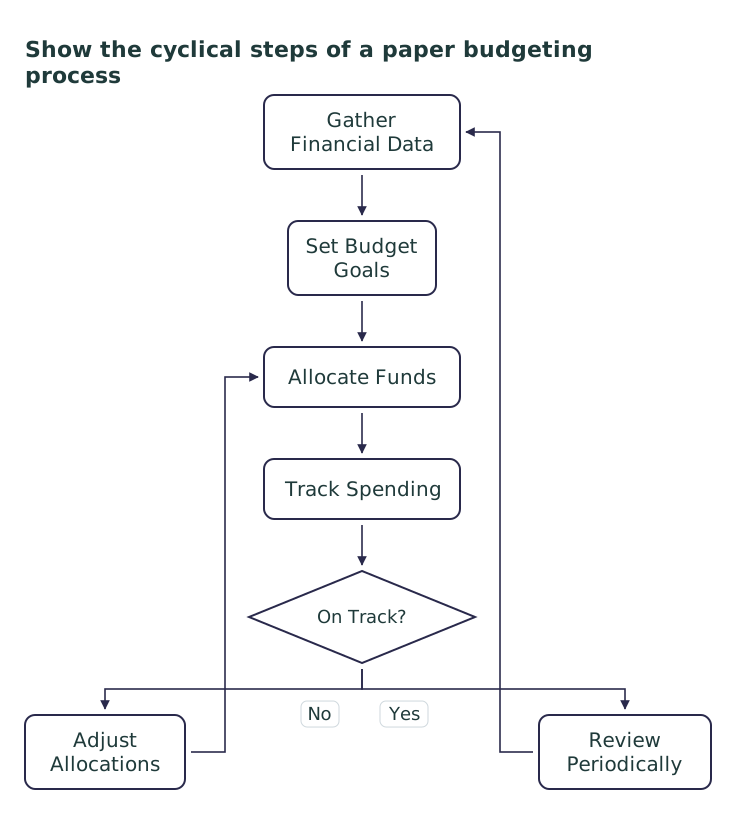
Schedule a recurring time, like every Sunday after coffee. Open your binder and your weekly spending log. Quickly update your main monthly tracker with any transactions. Look at each category: Are you on track? Is an envelope running low? This isn’t for deep analysis, just a pulse check to prevent small drifts. This regular manual budget tracking keeps your finances top-of-mind.
The Monthly Review & Reset (30-45 Minutes)
This happens at the end of the budget month, before setting up the next one.
- Reconcile: Match your paper records to your bank statement.
- Assess: Look at each category. Where did you overspend? Where did you have surplus? Use your notes section to understand why (e.g., “Unexpected car repair,” “Ate out less than planned”).
- Adjust: Based on your findings, adjust budgeted amounts for the upcoming month. Maybe you need to increase your gas budget and decrease your entertainment fund.
- Celebrate & Set Up: Acknowledge a goal met or a category well-managed. Then, prepare your fresh printable sheets and envelopes for the new month.
This cycle of planning, tracking, reviewing, and adjusting is where real financial control is built.
Adapting Your System: Life Changes & Evolving Finances
A static budget will break. Your paper-based budgeting system must be flexible enough to grow with you.
Scenario: You Get a Raise or New Income
Don’t let lifestyle inflation absorb it all automatically. First, update your net income on your tracker. Then, deliberately decide where the extra money goes using your existing categories. Does it accelerate a debt snowball? Boost your emergency fund? This intentional allocation ensures your raise moves you toward your goals faster.
Scenario: A Major Expense or Life Event
Having a baby, buying a car, or starting a home renovation requires a budget overhaul. Create a temporary, separate section in your binder for this project. Draft a new budget that reflects the new income, expenses, and goals. Your printable sheets are just paper—you can always print new ones that reflect your current reality. The system is your tool, not your master.
Scenario: Paying Off a Debt
This is a victory to celebrate! When you eliminate a payment, that money now has a “job.” Don’t just let it disappear into general spending. During your next monthly review, reassign that entire payment amount to your next financial priority, whether it’s the next debt on your list or a savings goal. Your paper tracker makes this reallocation visually clear and satisfying.
Your Tangible Path to Financial Control Starts Now
The most sophisticated digital app is useless if you don’t open it. The beauty of paper budget organization lies in its unavoidable physicality—it sits on your desk, waits in your bag, and asks for your attention in a quiet, persistent way. It transforms abstract numbers into a concrete plan you can see and touch, building a mindful muscle around your money that no automated tool can replicate.
Don’t wait for the perfect moment or the perfect printable. Your decisive next step is simple: Take one small, physical action today. Grab a notebook and a pen. Write down one financial goal. Print a single monthly tracker sheet and fill in your income. That first mark on the page is the start of a new, more intentional relationship with your finances. The rest of the system—the binder, the envelopes, the ritual—will build naturally from that first, tangible commitment.
Paper budget organization offers a mindful, tactile alternative to digital finance management. By using physical tools like binders, cash envelopes, and printable trackers, you create a visible system that increases awareness and control over spending. Key methods include the restrictive Cash Envelope System for overspenders and the detailed Binder System for planners, with hybrid approaches blending paper and digital convenience. The core of success lies in the consistent habit of weekly check-ins and a thorough monthly review to adjust your plan, ensuring your system evolves with your life and goals. Ultimately, it’s the hands-on ritual that builds lasting financial discipline.
Q: Is paper budgeting outdated in a digital world?
A: Not at all. While digital tools offer automation, paper budgeting provides tangible mindfulness and a visual disconnect from the screens that often encourage impulsive spending. It’s a focused, intentional practice that many find leads to better financial awareness and discipline than passive app tracking.
Q: How do I handle online bills and subscriptions with a paper system?
A: Your paper system is for planning and tracking, not necessarily for payment execution. List all online bills on your printable bill calendar with their due dates and amounts. After you pay them digitally, immediately record the transaction on your paper tracker. This keeps everything accounted for in one place.
Q: What if I make a math mistake on my paper tracker?
A: It happens to everyone. Use a pencil for calculations or draft numbers. The monthly reconciliation with your bank statement will catch any discrepancies. Simply draw a single line through the error, write the correct number nearby, and move on. The goal is progress, not perfect penmanship.
Q: Can I combine a paper budget with a budgeting app?
A: Absolutely. This hybrid approach is very effective. Many people use a paper budget planner for monthly planning, goal setting, and the review ritual, while using a simple app to track transactions on-the