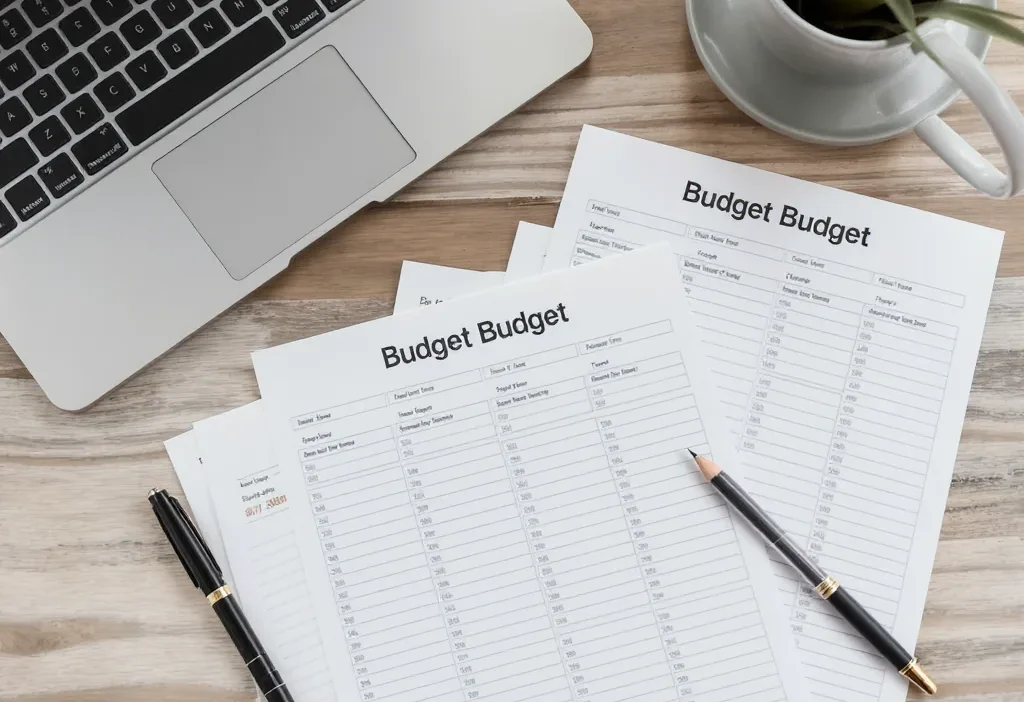
Here’s a counterintuitive truth about managing your money: the most beautiful, intricately designed printable budget pages are often the ones you stop using first. We’ve all been there—drawn in by the promise of perfect control from a template with thirty color-coded categories, only to abandon it after a week because logging a simple coffee purchase felt like a chore. The real secret to finding printable budget pages that work isn’t about aesthetics or complexity; it’s about identifying the designs that seamlessly integrate into your daily life versus the ones that create friction and lead to failure. This guide cuts through the noise to show you what actually makes a budget printable functional for daily tracking and, more importantly, what common design traps render even the prettiest worksheets useless in practice.
The best way to find printable budget pages that work is to prioritize simplicity and daily usability over aesthetic design. Focus on pages with clear categories, ample writing space, and a logical flow that matches your spending rhythm, avoiding overly complex trackers that create friction. Effective printables make the act of recording a transaction feel quick and effortless, not like a chore.
Myth #1: More Categories Mean Better Control
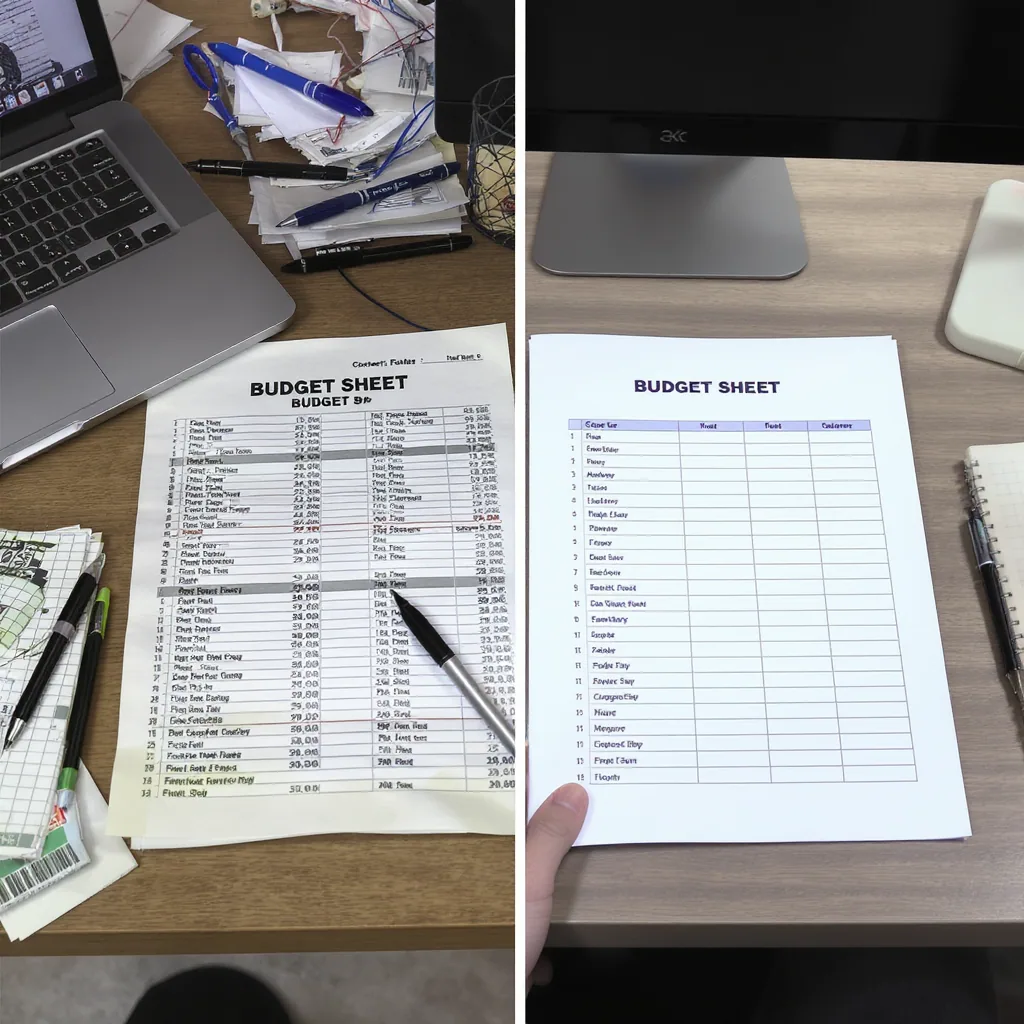
It’s a common trap: you download a beautifully designed budget printable, only to find it has 30+ specific categories for spending. The promise is that this granularity will give you ultimate financial control. The reality? It’s often the first step toward abandoning your budget altogether.
The Friction of Over-Categorization
When you buy a coffee, the mental effort of deciding whether it belongs under “Food & Drink,” “Coffee Shops,” “Daily Treats,” or “Beverages” creates friction. That tiny moment of hesitation is enough to make you skip logging it entirely. For daily use, this complexity is the enemy of consistency. The goal of simple budget pages for daily use is to reduce decision fatigue, not increase it.
The Fact: Broader Categories Are Actionable
What actually works is consolidating your spending into 5-7 core categories. Think: Housing, Transportation, Groceries, Utilities, Personal Spending, and Savings/Debt. A “Personal Spending” category, for example, can cover everything from that coffee and a new book to a streaming subscription. This approach turns the question from “Which of these 12 boxes does this go in?” to a simple, quick check: “Was this a need or a personal want?” That’s the kind of insight that leads to real behavioral change, not just meticulous tracking.
What Actually Works: The Daily Transaction Flow
The most effective daily budget tracker printable isn’t judged by its design in isolation, but by how seamlessly it fits into the rhythm of your day. The key metric is “frictionless capture.”

Photo by Jakub Zerdzicki on Pexels
Imagine this scenario: You buy lunch. The receipt goes in your pocket or your wallet’s coin pouch. Later that evening, while your coffee brews or just before you charge your phone, you pull out that receipt and your budget sheet. You glance at the total, write “$12.50” under “Food,” and maybe jot “work lunch” in a notes column. The entire process takes 30 seconds. The page is kept in a common area—on the kitchen counter, clipped to the fridge, or in your planner that’s always on your desk. This works because it’s a form of habit stacking, attaching a new habit (logging) to an existing one (your evening routine). The printable succeeds because it makes the act of recording feel quick and effortless, not like a administrative chore.
The Design Traps That Make Printables Useless
Many useful budgeting worksheets are undone by poor design choices that look fine on screen but fail in practice. Here’s what to avoid and what to look for instead.
Don’t: Create Friction with Bad Design
- Tiny Writing Spaces: Lines crammed too close together or boxes too small for legible handwriting.
- Confusing Layouts: Numbers that don’t align, or sections that force your eye to jump around the page to follow a logical sequence.
- No “Notes” Column: Without a place for a quick context note (“car repair,” “birthday gift”), you lose the “why” behind the spend, which is crucial for reflection.
- Missing Running Balance: A page that only logs expenses without showing a running total of what’s left requires you to do manual math, adding another step.
- Weekly Summaries Only: Pages designed for a single weekly summary force you to remember transactions days later, which is unreliable.
Do: Prioritize Clarity and Ease
- Ample White Space: Generous lines and margins make writing physically easier and reduce visual clutter.
- Bold Totals: The “Remaining” or “Balance” figure should be prominently displayed, so you instantly know your status.
- A Simple Grid: The most functional layout is often a straightforward table with columns for Date, Amount, Category, and Notes. This mirrors how we naturally think about a transaction.
- Dark, Clear Lines: Avoid pale gray lines that disappear when printed; use dark, solid borders to define spaces.
Choosing Your Page: The 2-Minute Usability Test
You don’t need to try a printable for a week to know if it will work. Apply this immediate, practical filter to any template you’re considering.
Take the printable and a pen. Now, simulate logging a simple, hypothetical purchase—say, a $4.50 coffee. Can you find where to write the date quickly? Is there a clear, broad category like “Personal” or “Food” to put it in? Is there a spot for a note if you wanted to add “Monday coffee”? Can you then easily update a “Remaining Balance” field? If you can complete this entire mental and physical process in under two minutes without a moment of confusion, you’ve found a keeper.
This test cuts through the noise. It proves that the page’s design supports your daily workflow. It reinforces the core principle: the best printable budget sheets that work are those that prioritize speed and clarity over aesthetic perfection. They remove barriers instead of creating them, making daily tracking a sustainable habit rather than a burdensome task.
Focus on Function, Not Flair
A budget page that works for daily use isn’t about finding the prettiest template. It’s about finding the one that disappears into your routine. The right printable feels like a quick check-in, not a homework assignment. It gives you just enough structure to create awareness without so much complexity that it causes resistance.
Remember, the goal is progress, not perfection. Your budget is a tool for insight, not a report card. By choosing a page that passes the 2-minute test—with its broad categories, clear layout, and space for notes—you’re choosing a tool that supports you. You’re removing the friction that leads to abandonment and building a sustainable practice of financial awareness, one simple transaction at a time.