
You open your budgeting app, ready to log a simple grocery run, and are immediately met with a wall of 50+ categories. “Was this ‘Groceries: Pantry Staples’ or ‘Groceries: Fresh Produce’?” you wonder, your motivation draining as you search. This moment of frustration is a clear sign your system has tipped from helpful to hindering. Creating a detailed budget is a fantastic first step, but when you have too many budget categories, it can lead to decision fatigue, missed transactions, and ultimately, abandonment. The goal isn’t to track every penny into a hyper-specific bucket but to create a framework that guides your spending behavior with clarity and consistency. This guide is about finding that sweet spot. We’ll start by exploring the common—but flawed—ways people try to fix an overly complex budget, so you can avoid those pitfalls and move straight to a practical, sustainable strategy for budget category simplification.
If your budget has too many categories, the solution is strategic consolidation, not elimination. Focus on merging similar spending areas (like ‘Netflix’, ‘Hulu’, ‘Spotify’ into ‘Streaming Subscriptions’) to reduce complexity while maintaining control. The fix involves auditing your list to identify redundant or overly granular categories and grouping them based on shared purpose or your actual spending behavior, creating a simpler, more actionable budgeting system.
Why More Categories Isn’t Always Better
It’s easy to believe that a budget with 50+ meticulously named categories offers the ultimate control. You can see exactly where every last dollar went. But this hyper-granular approach often backfires. The goal of a budget is to guide behavior, not to create a perfect accounting ledger. When your budgeting system is too complex, you face decision fatigue every time you log a transaction—was that sandwich “Lunch – Workday” or “Fast Food – Quick”? This leads to missed transactions, frustration, and ultimately, abandonment.
Contrast this with a simpler framework. Consolidating related financial categories reduces the mental load, making it easier to be consistent. You trade microscopic detail for a clearer, high-level view of your spending patterns. This clarity is what leads to sustainable budget management, not the illusion of control that comes from an overwhelming list.
Common (But Flawed) Ways People Try to Fix It
When faced with the problem of too many budget categories, people often reach for quick fixes that create new problems. Understanding these pitfalls is the first step toward a real solution.
The “Delete and Hope” Method
This involves arbitrarily deleting categories that feel annoying or minor. The flaw? You lose visibility into that spending entirely. That “Hobby Supplies” category you deleted doesn’t mean you’ll stop buying paint or guitar strings; it just means that money now disappears into a black hole, undermining your entire budget.
The “Miscellaneous Monster” Trap
Here, you merge dozens of small, variable expenses into one giant “Miscellaneous” or “Other” bucket. This is a classic mistake in attempts to reduce budget categories. The category becomes so large and vague it’s meaningless for tracking or making spending decisions. It’s where financial awareness goes to die.
Giving Up on Tracking Entirely
This is the nuclear option: deciding the whole system is broken and stopping budget tracking altogether. While it eliminates the category problem, it also eliminates any forward-looking financial plan. It confuses simplifying the tool with abandoning the tool.
Ignoring Variable & Discretionary Spending
Some only consolidate fixed bills (like rent, car payment) but leave 30+ categories for variable spending (dining, entertainment, shopping). This misses the core of the issue, as it’s the discretionary spending categories that usually spiral out of control and need smart budget category simplification the most.

Photo by www.kaboompics.com on Pexels
A Practical Framework for Smart Consolidation
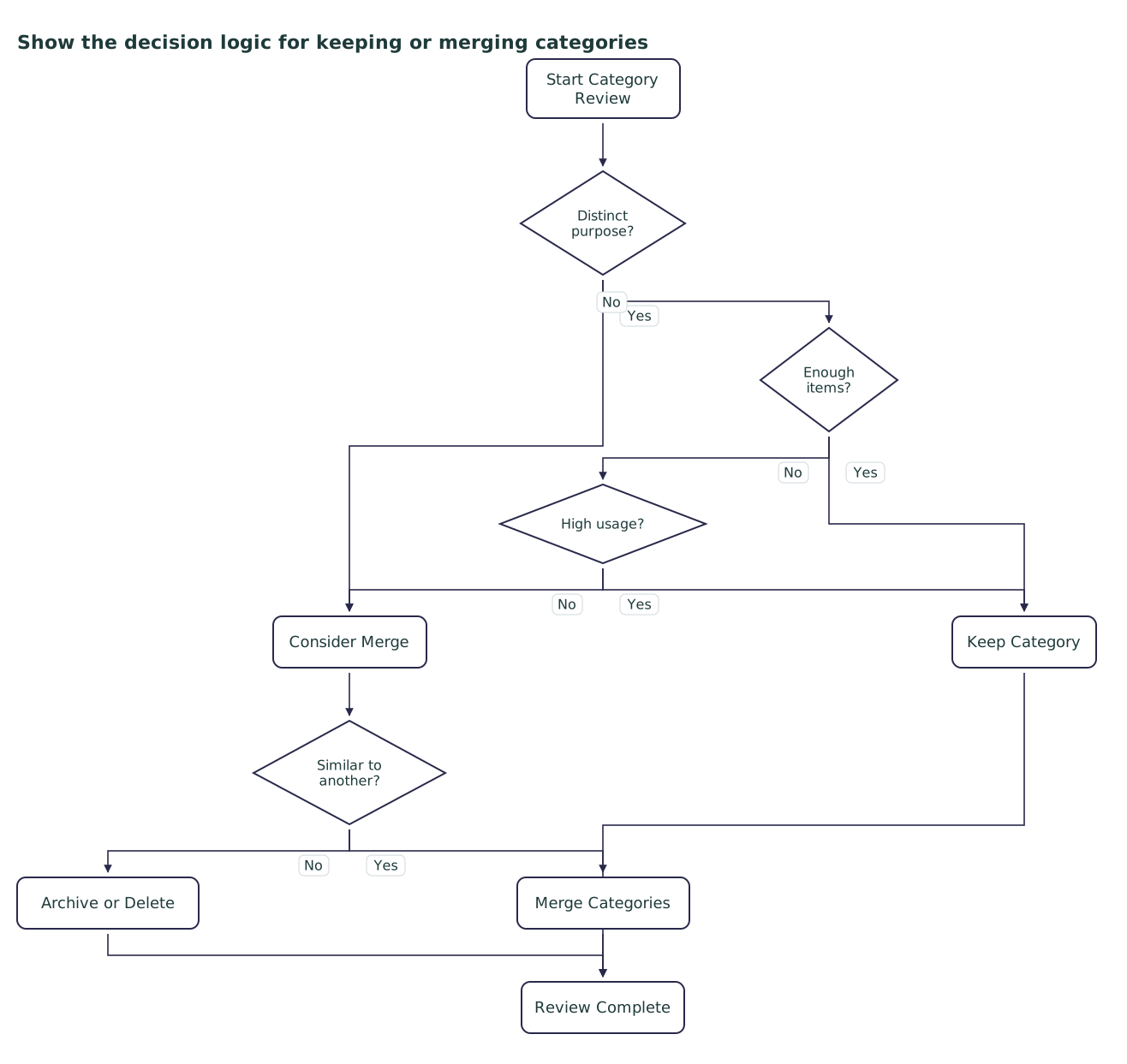
The effective strategy isn’t elimination, but strategic merging. Your goal is to consolidate budget categories into groups that are meaningful for your spending behavior. Follow this simple, three-step framework.
1. Audit & Identify Redundancies
Review your last 2-3 months of transactions. Look for categories you rarely use or groups of categories that serve the same essential purpose. Do you really need separate lines for “Netflix,” “Hulu,” and “Disney+”? Or do they collectively represent “Streaming Subscriptions”?
2. Group by Purpose or Behavior
This is the core of budget category simplification. Merge categories based on a shared “why.” For example:
- Dining Out: Merge “Coffee Shop,” “Lunch Out,” “Fast Food,” “Restaurant Dinners.”
- Home Maintenance: Merge “Cleaning Supplies,” “Lightbulbs,” “Small Repairs.”
- Personal Care: Merge “Haircut,” “Toiletries,” “Skincare.”
3. Test & Adjust
Run your new, streamlined budget framework for a month. Does the new “Dining Out” category give you enough insight, or do you need to split “Work Lunches” from “Weekend Dinners”? The key is to start broad and only add detail back if a specific area proves problematic. This approach, as noted by the Consumer Financial Protection Bureau, aligns with creating a budget that focuses on your most important spending goals.
Finding Your Personal Category ‘Sweet Spot’
There’s no magic number of categories. The right amount depends on your life. Someone with a highly variable freelance income may need more granularity to manage cash flow, while someone with stable salary and simple habits may thrive with just 10 broad categories.
Use this simple litmus test: Can you name the purpose and a rough monthly target for each category without looking at your budget app? If you can’t, they’re not meaningful guides—they’re just clutter. Start with the consolidated list from the framework above. If you find yourself consistently overspending in a broad category like “Shopping,” that’s your signal to temporarily split it (e.g., “Clothing” vs. “Home Goods”) to diagnose the issue, then merge it back once control is regained. This flexible approach keeps your budgeting system working for you, not the other way around.
Simplify for Consistency, Not Perfection
Streamlining your budget isn’t a step back—it’s a sign of progress. It means you’re moving from a rigid, exhausting system to a flexible tool designed for real life. The aim is to spend less time categorizing and more time understanding your financial flow, which is the true path to control.
Remember, a good budget should feel like a helpful map, not a straitjacket. By focusing on meaningful groups rather than microscopic details, you build a budget management habit that lasts. Give yourself permission to simplify your budget and experience the freedom that comes with clarity and consistent action.