
You created a budget with the best intentions—a clear map for your money. Yet, a few weeks in, it starts to feel irrelevant. Unexpected expenses pop up, a social weekend throws your dining out category into the red, and that sinking feeling returns: your financial plan is drifting, and you’re back to reacting instead of controlling. This isn’t a failure of your budget; it’s the inevitable result of treating it as a static, one-time plan rather than a living system. The solution isn’t to scrap your numbers or double down on restrictive guilt. It’s to implement proactive budget reset routines—scheduled maintenance sessions that transform your budget from a brittle rulebook into a dynamic, resilient tool for financial calm.
A budget reset routine is a scheduled, non-negotiable habit where you compare your planned spending to reality, identify leaks, and reallocate funds to keep your financial goals on track. The most effective system combines a fast weekly check-in to catch small drifts with a comprehensive monthly review for strategic course correction. This two-tiered approach ensures your budget reflects your actual life and priorities, turning a source of stress into a foundation for confidence.
The Budget Reset Mindset: From Static Plan to Dynamic System
Let’s start with the most important part: your perspective. A budget isn’t a contract you sign in blood on the first of the month. It’s a forecast, a best-guess map of your financial terrain. The road always has potholes, detours, and unexpected scenic overlooks. A financial reset system is how you recalculate your route without panicking.
This shift is crucial. Instead of viewing a budget overspend as a personal failure, you start to see it as data. That data tells you your plan didn’t match reality—so you adjust the plan. This turns budgeting from a source of guilt into a tool for proactive management. The goal isn’t perfection; it’s informed course correction. This budgeting reset ritual is what separates a plan that gathers dust from one that actually guides your decisions.
Think of it like navigation software. You wouldn’t get mad at your GPS for rerouting you around a traffic jam; you’d be grateful it kept you moving toward your destination. Your monthly and weekly check-ins serve the same purpose. For more on how habits like this form, resources on behavioral economics and habit formation can offer useful insights.
Your Reset Toolkit: What You Need Before You Start
You can’t build a habit without the right tools. Gathering these items once makes every subsequent reset faster and more effective. Think of this as setting up your financial workshop.

Photo by Pavel Danilyuk on Pexels
Essential Tools for Your Routine
1. A Consistent Tracking Method: This is non-negotiable. Choose one primary place—a dedicated app (like a zero-based budgeting app or a simple expense tracker) or a spreadsheet—and commit to it. The method matters less than consistent use.
2. Access to Financial Statements: Have your bank and credit card logins handy, or ensure your tracking app is synced. You need to see the raw numbers.
3. Your Budget Template/Categories: Have your current planned spending categories visible. This is your “map” you’ll be comparing reality against.
4. A List of Active Financial Goals: Is your focus debt payoff, building an emergency fund, or saving for a vacation? Keep this list front and center to guide your decisions.
5. A “Buffer” or “Miscellaneous” Category: This is your budget’s shock absorber. It’s a small, planned amount for the completely unplanned. Without it, every surprise blows your plan apart.
The 20-Minute Weekly Budget Reset
The weekly budget reset is your tactical huddle. It’s not for deep analysis; it’s for catching small leaks before they sink the ship. Schedule 20 minutes on the same day each week—Sunday evening or Monday morning works well for many.
Here’s your fast protocol:
- Reconcile Transactions (5 mins): Log any pending cash, Venmo, or card transactions into your tracker. Get everything from the past week categorized.
- Check Category Health (10 mins): Do a quick scan of your spending categories. Are any already nearing their monthly limit? Is one unusually low? Don’t adjust anything yet—just note it.
- Note Anomalies & Plan Ahead (5 mins): Ask: “What’s different about next week?” A friend’s birthday dinner? A scheduled car maintenance? Mentally (or literally) flag those days so you’re not caught off guard.
Your Weekly Reset Quick-Start Checklist
- Set a recurring calendar invite for your 20-minute slot.
- Close all tabs except your bank and budget tracker.
- If a category is over 50% spent and it’s only week two, make a note to investigate next month.
- If you’re under budget in a flexible category (like “Dining”), you can consciously allow a little more next week or let it roll over.
- Celebrate one win, no matter how small (“Stayed under on groceries!”).
The Complete Monthly Budget Reset: A 7-Step Protocol
This is your strategic review. The monthly budget reset is where you learn from the past month and intentionally design the next one. Block 60-90 minutes, ideally right after a pay cycle ends or on the first of the month.
Follow this 7-step budget reset process:
Step 1: Gather All Your Data
Pull up last month’s budget plan and your actual spending from your tracker or statements. Have your income details and goal list ready. This is your “before” picture.
Step 2: Review Actual Income
Did your take-home pay match what you budgeted? Note any differences from bonuses, side gigs, or deductions. This sets the true boundary of your spending power.
Step 3: Conduct an Expense Audit
Go category by category. What did you actually spend on groceries, gas, and fun? Be brutally honest. This audit reveals your true spending habits, not your aspirational ones.
Step 4: Analyze Reality vs. Plan
This is the core. For each category, ask: Was I over, under, or on target? Don’t judge—just calculate the difference. This creates a clear picture of your monthly surplus or total overspend.
Step 5: Check Progress on Goals
Did you transfer the planned amount to debt or savings? If not, why? Life happens, but this step ensures your goals remain a priority, not an afterthought.
Step 6: Adjust Allocations for the Coming Month
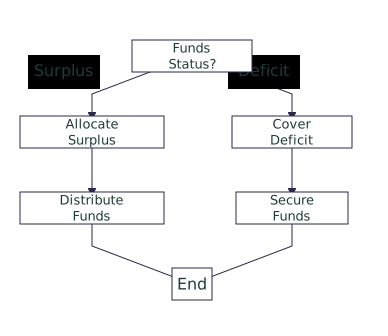
Here’s where you make your budget a living document. Use last month’s data to inform next month’s plan. The flowchart below outlines the logical process for reallocating funds.
Step 7: Set Next Month’s Intentions
Based on your analysis, set one or two specific financial intentions for the new month. Examples: “Be more mindful of weekday lunch spending” or “Protect the ‘Buffer’ category for real emergencies.”
Common Budget Reset Pitfalls (And How to Avoid Them)
Even with the best system, habits can derail. Recognizing these common traps makes your financial routine reset more resilient.
Pitfall 1: The All-or-Nothing Trap
Scenario: You miss a weekly check-in, so you decide the whole month is “blown” and abandon your budget until the 1st.
Workaround: The routine is a tool, not a test. Just pick up where you left off. A partial reset is infinitely better than none.
Pitfall 2: The “Invisible Money” Blind Spot
Scenario: You diligently track card purchases but forget the $40 in cash you withdrew or the $15 you Venmo’d a friend.
Workaround: Treat cash as a “Cash” spending category. Log peer-to-peer payments immediately or do a weekly “cash and digital wallet” reconciliation.
Pitfall 3: Forgetting True Irregular Expenses
Scenario: Your budget works until Christmas, a car insurance bill, or a yearly subscription hits.
Workaround: List all non-monthly expenses (car maintenance, gifts, memberships). Divide the annual cost by 12 and create a monthly “Sinking Fund” category to save for them.
Pitfall 4: Getting Discouraged by One Bad Month
Scenario: A month with a major unexpected expense leaves you feeling defeated.
Workaround: Frame it as a learning experience. The reset process exists to handle these months. Ask: “What did this teach me about my emergency fund or buffer needs?”
Tailoring Your Routine: For Variable Income, Debt Payoff, and More
The core weekly and monthly framework is versatile. Here’s how to adapt it for common situations.
For Freelancers & Variable Income
Toolkit Adjustment: Your budget is based on a conservative estimate of your lowest likely monthly income. Surplus months fund your “Income Buffer” category first.
Protocol Shift: Your monthly budget audit starts with a precise income review. Allocate dollars to necessities first, then debt/goals, then discretionary spending—in that order.
For Aggressive Debt Payoff
Toolkit Adjustment: Your debt accounts are your primary “goals.” List them with balances and interest rates.
Protocol Shift: In Step 6 (Adjust Allocations), any surplus from other categories gets immediately directed to your target debt. Your weekly check-in is a morale booster to track the decreasing balance.
For Building an Emergency Fund
Toolkit Adjustment: Create a dedicated “Emergency Fund” savings category or account.
Protocol Shift: Treat this category like a non-negotiable bill. During your monthly reset, the transfer to this fund happens right after covering essentials, before other discretionary spending.
For Managing Seasonal Expenses
Toolkit Adjustment: Use sinking funds for known seasonal costs (holidays, summer camp, winter heating).
Protocol Shift: In high-spending seasons, your weekly reset becomes critical for monitoring these specific categories to ensure you’re on pace without draining everyday funds.
Your Next Step: Schedule It, Don’t Just Plan It
The power of this system isn’t in reading about it—it’s in the doing. The difference between a budget that works and one that doesn’t is maintenance. You now have the blueprint for that maintenance: a lightweight weekly check-in and a purposeful monthly review.
So, here’s the decisive move. Open your calendar right now. Find the next weekend or the day after your next payday. Block 20 minutes for your first weekly reset. Then, block a 60-minute slot for your first full monthly review. Put these appointments in your calendar as non-negotiable, just like a doctor’s visit or a work meeting.
Your budget is ready to become the dynamic, supportive tool it was meant to be. Start the habit, embrace the adjustments, and watch your financial confidence grow one reset at a time.
Transforming your budget from a source of stress to a system of control hinges on a simple, two-tiered habit: the quick weekly budget reset and the comprehensive monthly budget reset. The weekly check-in is a 20-minute tactical review to catch leaks and plan ahead, while the monthly deep dive is a 7-step protocol to learn from the past and intentionally design your next month’s spending.
This approach shifts your mindset from viewing a budget as a rigid, static plan to treating it as a dynamic, living system that adapts to real life. By gathering the right tools, avoiding common pitfalls, and tailoring the routine to your specific situation (like variable income or debt payoff), you build a resilient financial practice. The ultimate goal is consistent, proactive management—not elusive perfection.