
Here’s a counterintuitive truth: if your once-reliable budget system has started to feel broken, it’s likely a sign of success, not failure. The very life changes you were budgeting for—a promotion, a new home, shifting priorities—have arrived, but your static financial model hasn’t kept pace. This misalignment, often called budget drift, is an inevitable byproduct of a dynamic life running on a fixed plan. The frustration isn’t that you’re bad with money; it’s that your system is no longer speaking the language of your current reality. This article diagnoses the precise reasons why budget systems stop working over time and, more importantly, outlines the safest, least disruptive method to reorganize and refresh your framework without the risk and demotivation of starting from scratch.
Budget systems stop working because they are static models trying to map a dynamic life. Income changes, expenses evolve, and goals shift, but the budget’s categories and rules remain fixed, creating a growing gap between plan and reality. The safest way to reorganize a budget system isn’t a complete tear-down but a phased, targeted audit. You identify where the drift is happening, make incremental adjustments only to the broken parts, and realign the system with your current financial goals, preserving what already works.
The Inevitable Drift: Why No Budget System Stays Perfect
Your budget system isn’t broken; it’s simply outdated. Think of it like a map. A map that was perfectly accurate for your neighborhood five years ago won’t help you navigate the new roads and buildings today. Your financial life has similar “life velocity”—constant, subtle shifts that cause your once-perfect system to drift out of alignment. This isn’t a personal failure; it’s a systemic one. Understanding the core reasons for this budget drift is the first step to a safe correction.
Photo by Toàn Văn on Pexels
Life Velocity Outpaces Your Plan
Your income, expenses, and priorities are dynamic, but most budget systems are static. A promotion changes your cash flow. A move alters your housing and transportation costs. A new family member reshapes your spending categories. These aren’t emergencies; they’re normal life progression. Your old budget categories and allocations simply can’t absorb these changes without becoming irrelevant, leading directly to a budget system failure.
Rule Decay and Tool Friction
Two technical factors accelerate drift. First, rule decay: the personal guidelines you set (“only eat out twice a week”) may no longer fit your new habits or social circle. Second, tool friction: the app or spreadsheet you loved two years ago might now feel clunky, causing you to avoid logging transactions. When the process becomes a chore, compliance drops, and the system’s data—and usefulness—degrades.
Moving Goalposts
Finally, your original financial targets evolve. Paying off a student loan frees up cash flow. Saving for a down payment transitions into saving for renovations. If your budgeting system isn’t periodically reconnected to these new goals, it feels pointless, like running on a treadmill going nowhere. The system works mechanically, but it’s lost its purpose, making it easy to abandon.
The Danger Zone: What Makes a Budget Reorganization Risky
Recognizing the drift is one thing; fixing it is another. The instinct to “start fresh” is strong but often leads to worse outcomes. A risky budget reorganization can destroy your financial momentum. Before learning the safe method, know these common pitfalls.
The Scorched Earth Approach
The most dangerous move is deleting your old budget and building a new one from a blank slate. This destroys your historical spending data—the very evidence you need to diagnose drift patterns. It also resets your psychological momentum, making it feel like you’re “starting over” and increasing the chance of early abandonment. You lose the institutional knowledge embedded in your old system.
Over-Engineering and Tool Chasing
In an attempt to fix everything, it’s tempting to add layers of complexity: new sub-categories, intricate sinking funds, or convoluted tracking rules. This creates a system that’s theoretically perfect but practically unsustainable. Similarly, believing a new app will solve your problems (“tool chasing”) ignores the underlying misalignment. The problem isn’t the tool; it’s the map the tool is using. A complex system or constant app-hopping increases friction, guaranteeing future drift.
Ignoring Behavioral Inertia
Your spending habits have inertia. A successful budget system refresh works with your current behaviors, not against them. A risky reorganization tries to impose drastic, idealized behavior changes overnight (e.g., slashing your dining budget by 80%). This creates immediate resistance and failure, reinforcing the belief that “budgeting doesn’t work for me.” The safest approach acknowledges and gently redirects existing habits.
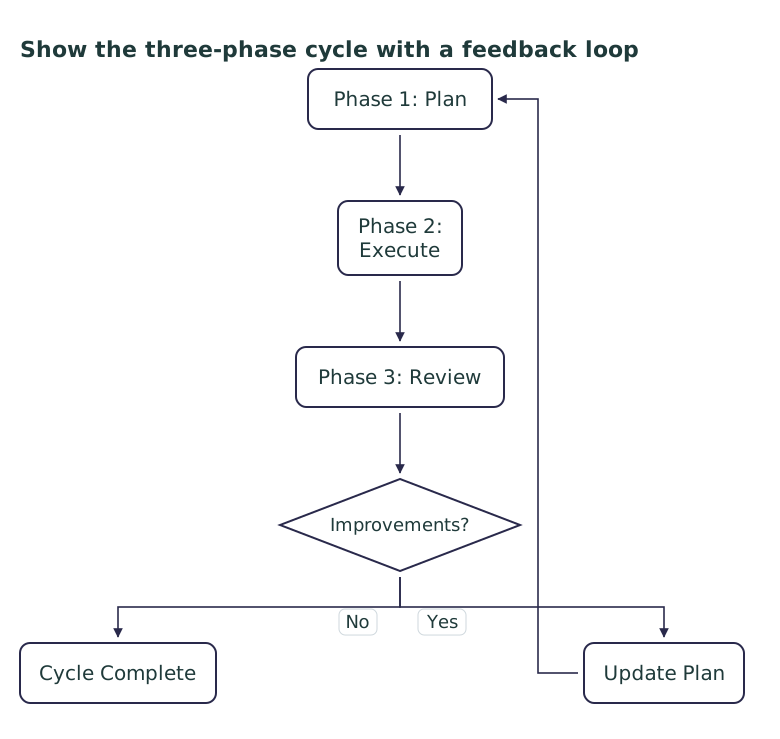
The Safe Reorganization Method: Audit, Adjust, Align
The safest path isn’t a tear-down, but a targeted renovation. This three-phase method preserves what works, surgically fixes what doesn’t, and reconnects your system to your current life. It’s a budget refresh strategy designed for resilience, not perfection.
Phase 1: The Diagnostic Audit
Do not change a single number yet. Instead, review your last three months of actual spending (bank/credit card statements) alongside your current budget. Your goal is to identify patterns: Which categories are consistently over? Which are consistently under? Where is money actually flowing that your budget doesn’t account for? This isn’t about judgment; it’s forensic data collection to pinpoint the exact locations and magnitude of the drift. This audit is the cornerstone of a safe budget overhaul.
Phase 2: Targeted Adjustments
Now, tweak only the broken parts. If your “Dining Out” category is consistently Over budget, increase its allocation to a realistic level based on your audit data. If your “Fuel” category is always under because you now work from home, decrease it and move that money. Leave every other well-functioning category completely alone. This might also mean updating a single outdated rule or simplifying a cumbersome tracking step in your tool. The change is incremental and focused.
Phase 3: Goal Realignment
Finally, ensure your newly adjusted system serves a current purpose. Connect your updated categories to a specific, active goal. For example, the money saved from your reduced “Fuel” category could be formally redirected to a “Next Vacation” fund within your budget. This step closes the loop, transforming your budget from a restrictive tracker into an empowering engine for your current priorities. It completes the budget system refresh.
Putting It Into Practice: A Scenario of Safe Correction
Let’s see how this works for Alex. After a promotion and a shift to hybrid work, Alex’s old budget feels useless. Dining out has skyrocketed (client lunches, celebrating with friends), while gas and public transit costs have halved. The old system says “fail,” but Alex uses the safe method.
First, the Diagnostic Audit. Alex reviews three months of statements, confirming the dining and transportation drift. Everything else (groceries, rent, subscriptions) is on track.
Next, Targeted Adjustments. Alex increases the “Dining & Entertainment” category by a realistic amount based on the new average spend and reduces the “Transportation” category. No other categories are touched. In their budgeting app, they add a quick-entry shortcut for lunch expenses to reduce logging friction.
Finally, Goal Realignment. The extra money now accurately allocated to dining feels intentional, not guilty. The funds freed up from transportation are formally assigned to a new “Spain Trip” savings category. Alex’s budget now accurately reflects their current life and actively funds a new goal. The reorganization was surgical, took less than an hour, and preserved years of historical spending data and momentum.
Embrace the Drift, Master the Refresh
A budget that never needs adjustment is a budget for a life that isn’t moving forward. The goal isn’t to find a perfect, static system but to build a resilient, adaptable one. Budget drift is not a sign of failure; it’s evidence that your life has evolved—which is ultimately what you’re planning for.
The safe reorganization method turns a moment of frustration into a routine maintenance task. By regularly auditing, making targeted adjustments, and realigning with your goals, you ensure your financial system grows with you. Start tonight not with an overhaul, but with a simple, non-judgmental review of your last three months of spending. You might be surprised how quickly clarity—and control—returns.